


My ghoulish friends, the sun has set and it’s time to kick off the lid of your coffin and crawl on outta that grave because I’ve got another creepy-crawly article for your pleasure and disgust! This week we’re going to learn about a creature you’ve probably encountered while you were snuggled in six feet under:

To the untrained eye they seem like nothing more than wiggly dirt-noodles, nondescript slime- tubes, slippery animated…corpse spaghetti? Look, what I’m saying is, they appear simplistic, but they really aren’t. Earthworms are complex little lifeforms with a lot of cool evolutionary features worth knowing about and respecting. I invite you to dig on in with me (like literally, they’re in the soil) and learn some neat facts you can whip out at this year’s Halloween party!
Alarming Anatomy:
The hills may have eyes, but worms don’t. Who needs eyes when you and the skin you breathe through evolved to prefer dark environments? That’s right, Earthworms breathe exclusively through cutaneous respiration which, if you remember from my Hole Toad article, requires moist skin to function, and sunlight tends to have a drying effect. But without eyes, how will a worm know they’re exposed to the sun before the drying process begins and it’s possibly too late? Enter photoreceptors. These single-celled sensors, equipped with a lens and one or two nerve fibers in each are distributed within the worm’s epidermis (more concentrated in some areas than than others) and they’re sensitive enough that the worm knows and reacts if it’s being exposed to even low light. The ability to sense light not only functions as a warning system for moisture control, it also helps alert the worm to potential predation danger. Being exposed to light generally means you’re out in the open, which means you’re vulnerable to predators. Those nerve fibers in the photoreceptors send a big NOPE to the worm and it seeks the safety of the dark, dank detritus and dirt. So goth.
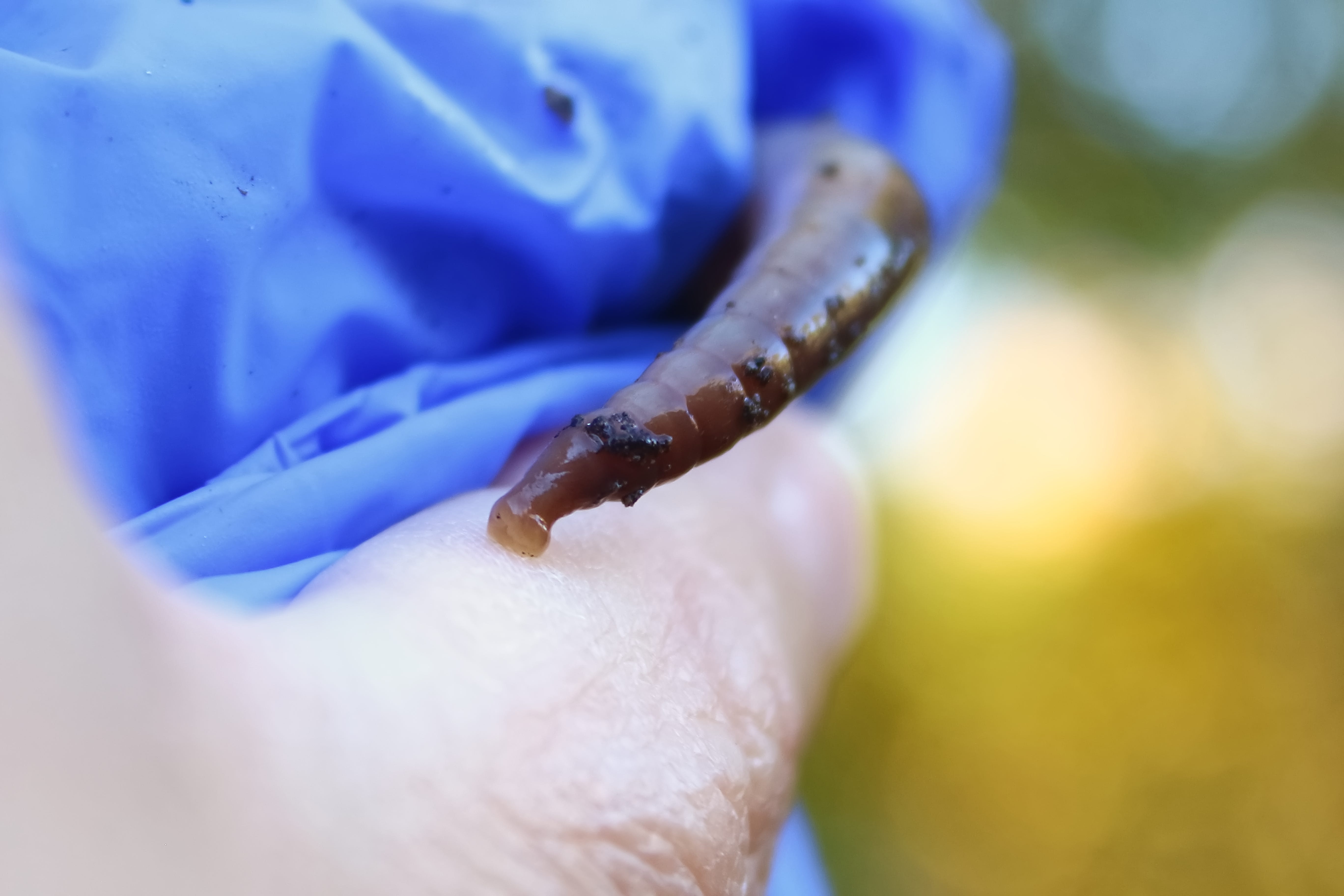
You know what other part of the worm is covered in sensory receptors, including the light-sensing ones? The mouth, including a luscious ‘lip’ called the prostomium:
Creepy Clitellum:
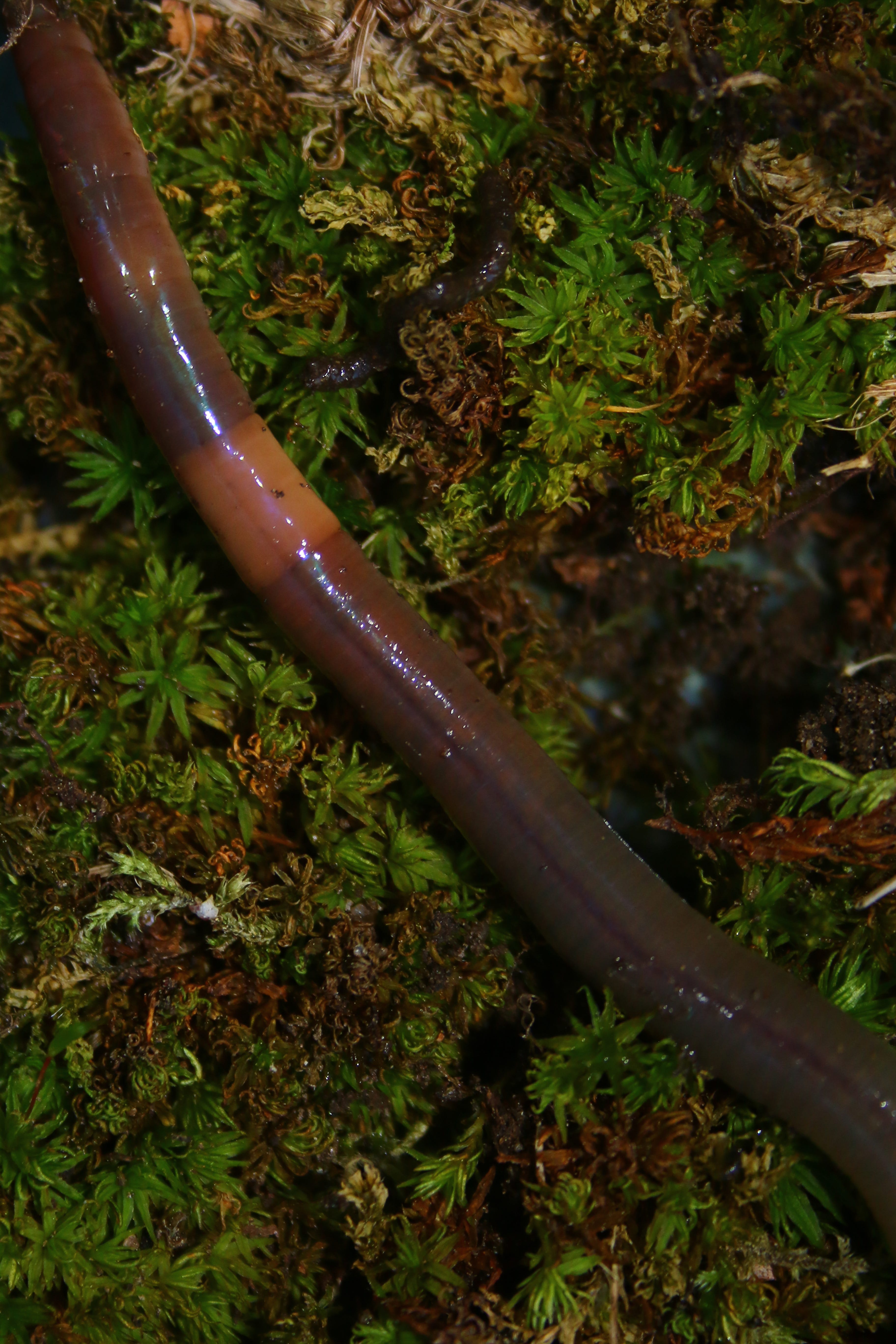
Earthworms aren’t exactly bursting with eye-catching features, but I’d say the clitellum (don’t even think about it) counts as one, if not the only. That’s the thickened, smooth band around the otherwise segmented worm body, and until recently I had no idea what it was for, if anything. Fashion accessory? Indicator of hierarchy (the thicker the stronger)? Tickle spot? Actually, it’s a built-in cocoon dispenser! Let’s back up a bit…
Did you know Earthworms are hermaphrodites, meaning they possess both male and female reproductive organs? And depending on the species, they reproduce both sexually and asexually. During mating, instead of one worm inseminating another, they actually exchange sperm so that each mating animal becomes both mom to the wormlings (imaginary term, I vote we make it a Thing) they produce and dad to the ones the mate produces. On the parthenogenetic (asexual) side, some worms’ eggs are capable of just…becoming worms without other fertilization. Dark magic, perhaps?
Okay, so, speaking of fertilization, that’s where this cocoon situation comes in. After mating, a slimy tube (ick) is produced by that clitellum ring, and as the worm shimmies it off their body it injects that stored sperm and its own eggs, encasing them in said cocoon. And that’s where the fertilization takes place, well after the actual act of sperm-exchange. In the case of asexual reproduction, it’s the same situation with the eggs in the shimmy-cocoon, just no sperm. Cocoons hang out in the soil for a bit while wormlets (do we like that one better?) develop and then ‘hatch’. No larval stage, no instars, just egg to worm. Slimy n’ simple.
I won’t go into which worms reproduce which way, and which do both, because my initial research is showing that it’s not exactly settled. Remember that whole thing about worms seeming like nondescript animate soba? Even scientists have a hard time distinguishing species, so I’m sure as hell not gonna make any guesses.
Repulsive Reflexes:
Do worms know what pain is? Do they actually feel-feel the stimuli their bodies react to? Does it matter? I’d say that depends on your point of view, but really, the only perspective that matters is the one going through it. So, let’s all don our homemade worm costumes (mine’s a giant dryer vent hose) and put ourselves in an earthworm’s…setae slippers?
Go on now, have a little wiggle in the dirt. Get yourself cozy under a planter or a log with some friends. Be the worm. Kinda nice, yeah?
Oh shit, what’s that? Light? You’re exposed! A big, salty human hand just yoinked you out of the safe, damp darkness and is now skewering you on a fishing hook! Ouch, stabby! Your body wriggles and writhes, your cerebral ganglion (your worm brain) releases enkephalins and beta endorphins to combat the assault on your nervous system. You hear (through your goddamn skin, by the way) a booming voice say, “Don’t worry little Timmy, the worm doesn’t actually feel anything, it’s body is just reacting,” just before you and the hook are flung into a pond.
Aaaaaand, scene.
Alright, drama aside, scientists didn’t even come to a consensus that earthworms feel pain until 1979 when those pain-coping brain chemicals I mentioned above were confirmed to be produced in the worm’s cerebral ganglion. What still is not agreed upon is whether the worm is cognitively aware of that pain. It’s probably not surprising that they have a ‘simpler’ central nervous system than humans or dogs or pigs, but earthworms do have proprioception (they are aware of the positioning and movement of their bodies ) and there are studies that indicate some level of learning capabilities. Regardless, the question still comes up for me: does it matter?
Maybe I’ll lose some of you here, but my feeling is that the reaction itself, whether mechanical reflex alone or not, is enough to take into consideration the reduction of harm. There’s an instinct present for these animals to prefer survival and they react chemically to pain similarly to humans. Really, if they are indeed much less cognitively complex, an argument can be made that an earthworm’s experience of pain could be worse since they seem to lack the ability to rationalize the reason or comprehend the source, making it unanticipated, reasonless pain. Worth considering, no?
Alright, my ghouls, the sun is about to come up so you’d better climb back into your coffins and, like our worm friends, stay outta the light. I’ll admit, this article was a struggle to write for a few reasons, not the least of which being that earthworm science is both quite detailed and quite undecided. I did my best to distill a few facts down to an entertaining write-up while still being accurate, so I hope you found it worthwhile. See you for the next creepy crawly October article!