


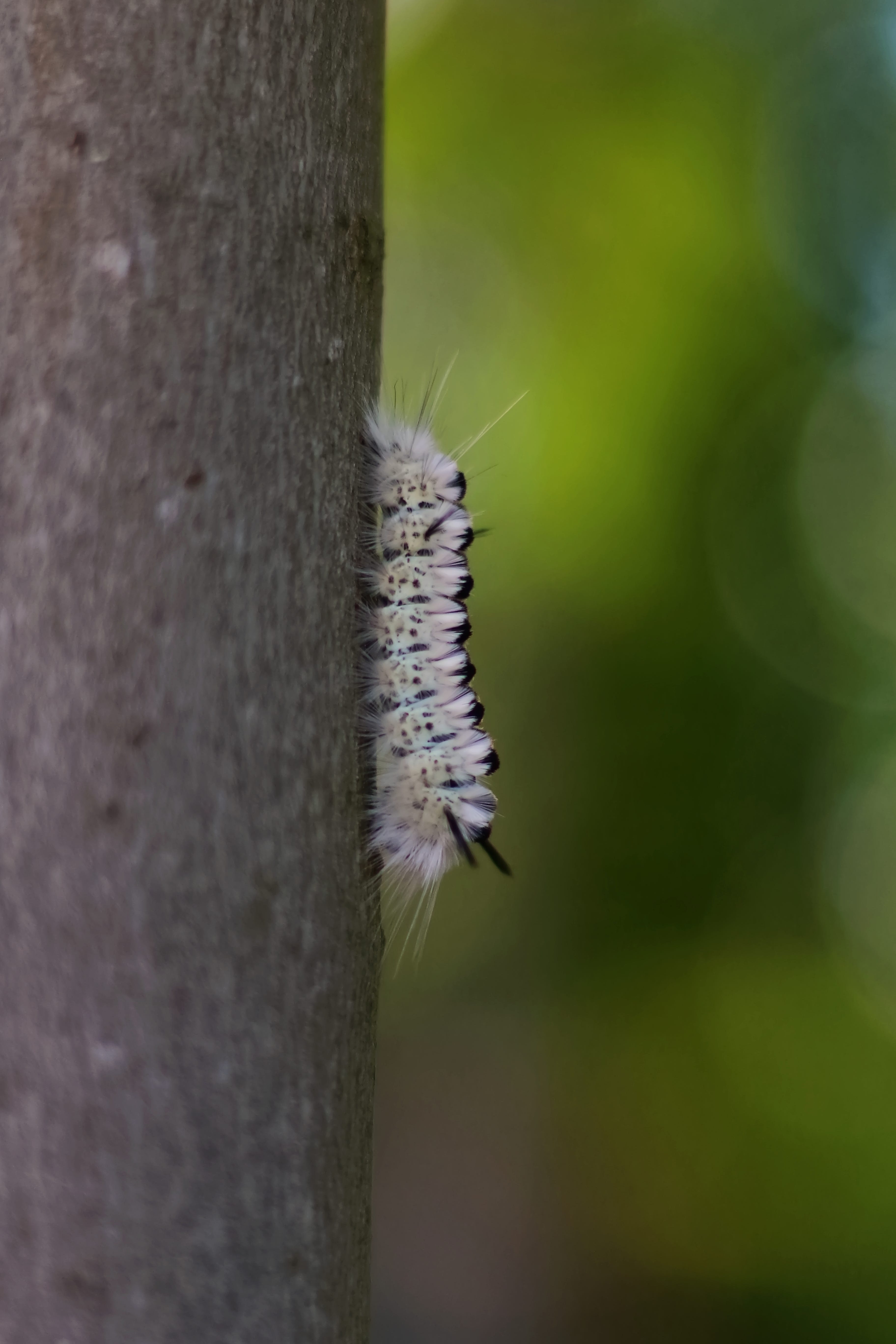
It’s that time of year here in New England where it seems like anywhere I look there’s a cute little fuzzy caterpillar truckin’ around. Whether in trees, dangling from silk strings, weaving through the grass, or climbing a fence post, these guys are getting ready to hunker down for the winter. They can be white, brown, yellow, have distinct tufts or a more uniform floof. They look highly pet-able, but to do so would be a mistake. Who are they?
They’re Tussock Moth Caterpillars!
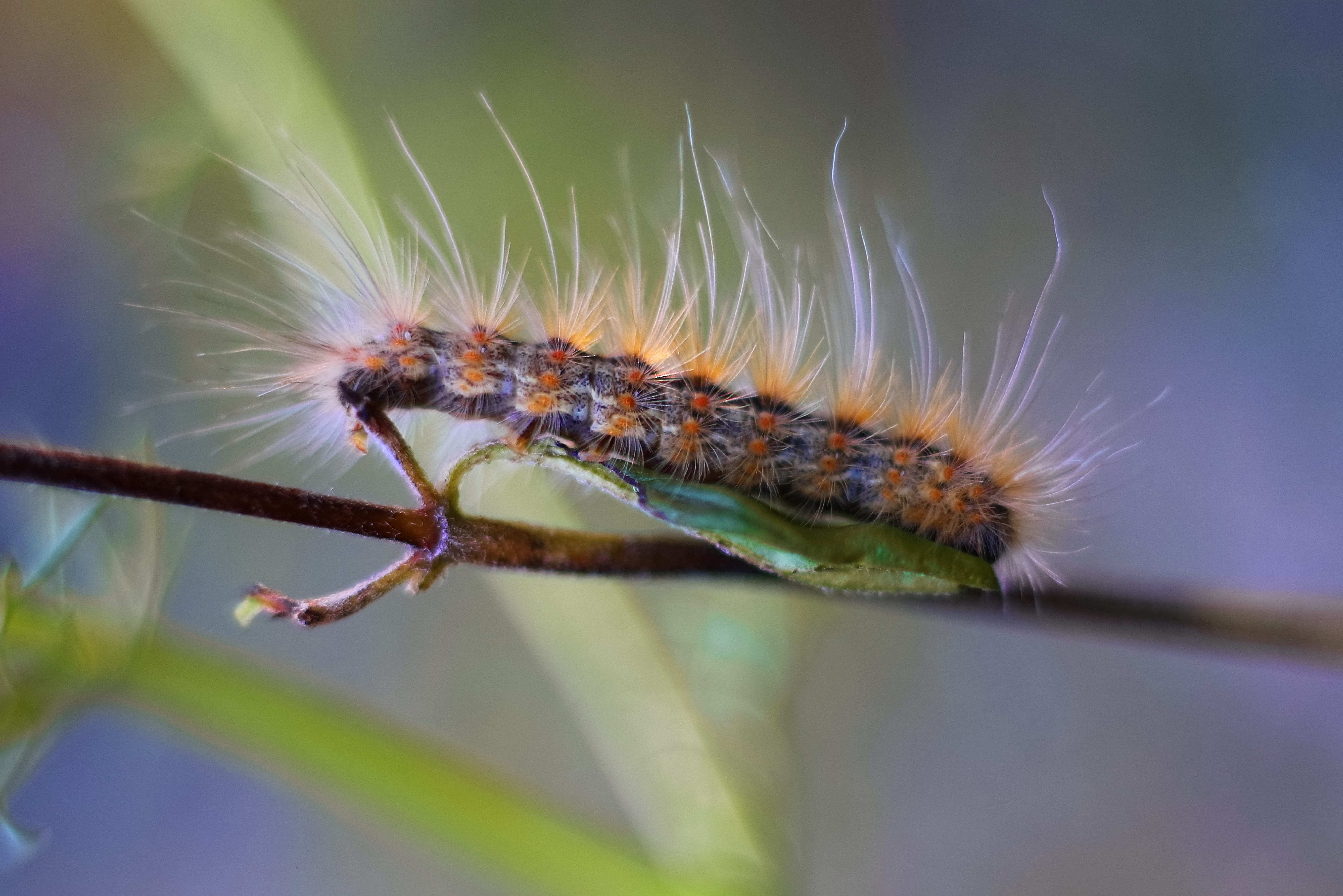
It seems to be becoming common knowledge that it’s inadvisable to handle fuzzy caterpillars or otherwise let them come in contact with your skin. What’s less common is why. Are the setae (hairs) toxic or venomous? Do they break off and burrow into your skin, procreating and eventually bursting back out through your very pores like microscopic Xenomorph chestbursters?
Ahem, sorry, not quite Halloween season yet.
Actually, no, none of the above seems to be the case. The truth is more straightforward; these stiff little fibers are covered in microscopic barbs that stick to and irritate the skin, resulting in varying degrees of contact dermatitis (rashes) and possible allergic reactions. Uncomfy, but unless these hairs get into your eyes or other…sensitive areas…there should be no long-term harm. It’s too bad for people like me who see any fluffy thing and immediately want to pet, snuggle or boop it, but great for the vulnerable caterpillars’ defense from predators and, well, weirdos who want to pet, snuggle, or boop them.


Let’s not get distracted by the obvious though. There are so many more cool facts about Tussocks (and moths/butterflies in general) that deserve our attention! Firstly I want to clarify that some of the moths we have named ‘Tussock’ aren’t even part of the classification, which surprised me. The Hickory Tussock, the Banded Tussock, and the Milkweed Tussock are actually Tiger and Lichen Moths, but get colloquially rolled in with Tussocks because of their similarly fuzzy caterpillars. Wouldn’t ‘cha know it, I mostly see the Hickory and Banded ‘imposters’ on my property. They are, however part of the same family, Erebidae, which is good enough for me.
Now, let’s get into a few perhaps lesser-known facts about Tussock caterpillars and moths:
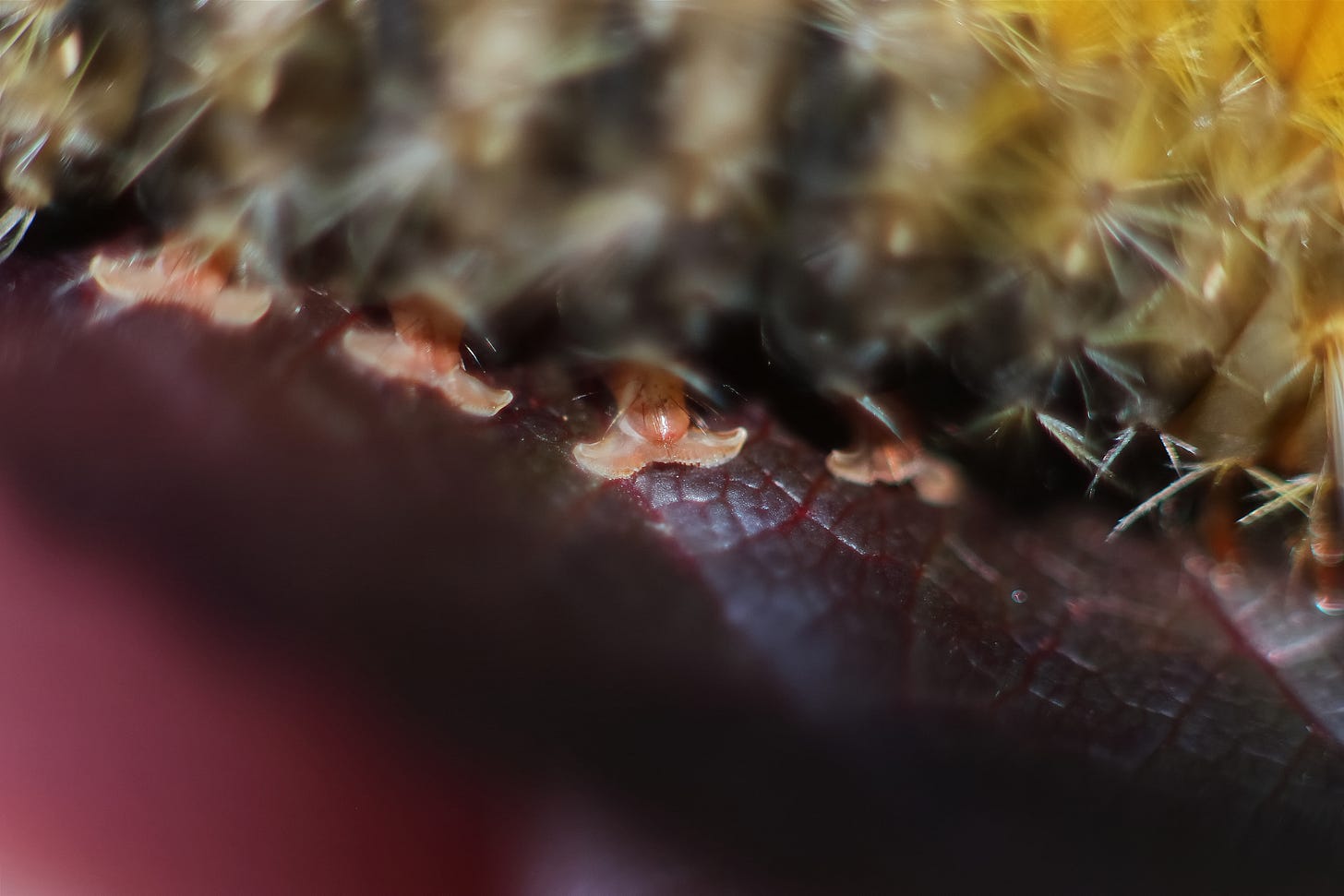
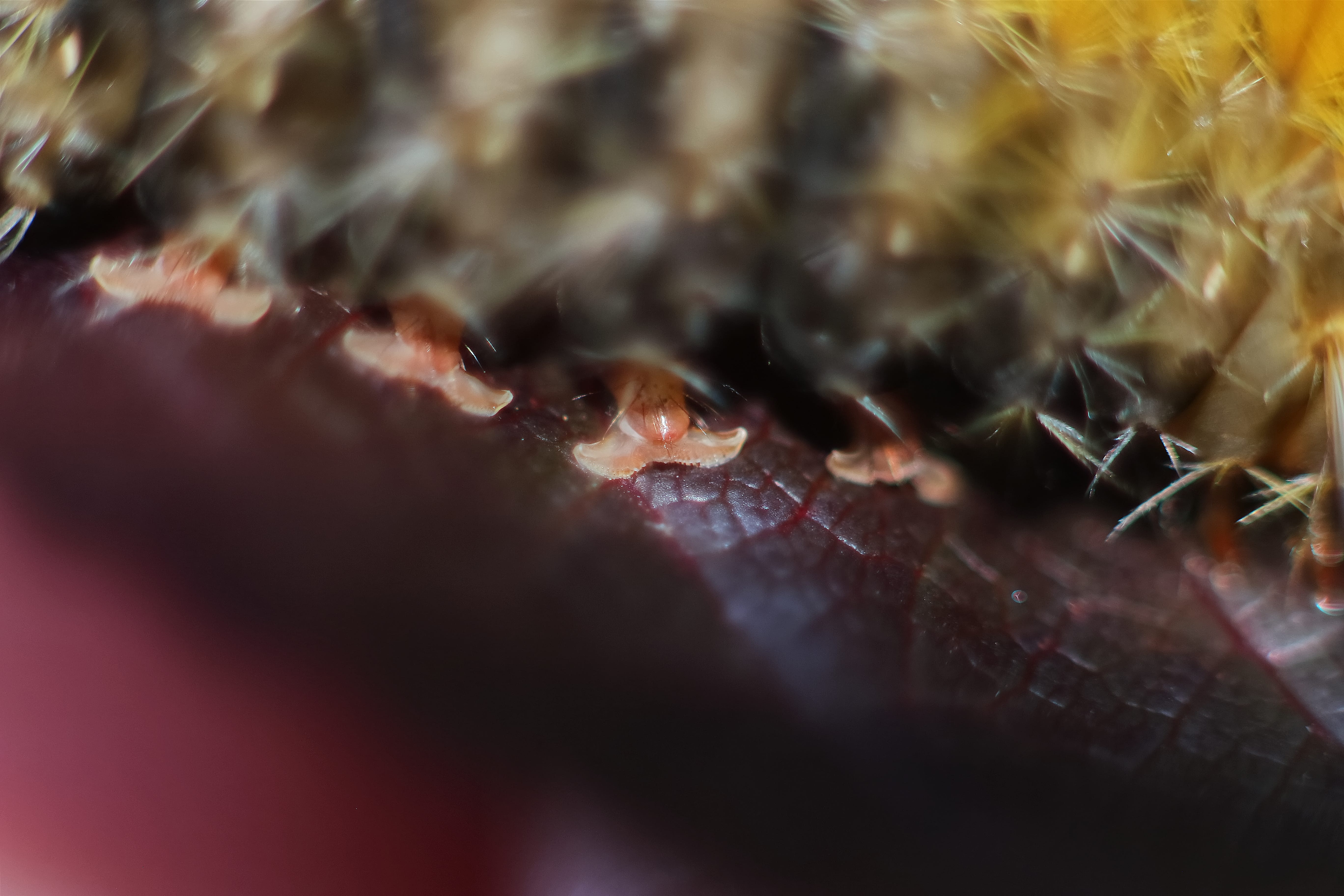
I want you to look at the photo below and tell me caterpillar feet are not adorable. Go on, I dare you. These little tooties, present in some form on many moth and butterfly larvae are called prolegs, and aren’t true legs or feet in the structural sense. They are basically fleshy stubs with grippy hooks called crochets that stick to surfaces as the caterpillar undulates to move. The prolegs themselves do not propel the larvae, they instead act as anchor points along the way. And, sure, this is not a feature unique to Tussocks, but definitely still worthy of sharing.
I wonder if they smell like corn chips… You guys, I just found out in my research for this article that some tussock females, those in the genus Ogyria like the White-marked Tussock, are flightless. I first imagined them like chickens having the appearance of fully formed wings that only carry them a little bit but don’t actually allow them to take full flight, but no - these fuzzy, stubby ladies only have at most tiny vestigial wings that sit uselessly on their bodies. As a result, the females don’t stray far from the cocoon from which they eclose. They attract males with a pheromone, inviting them to come fertilize the eggs they are already laden with. They then lay the eggs on their cocoon. I’ve never had the privilege of knowingly coming across a flightless female or her eggs, so the following photo was sourced from Wikipedia:
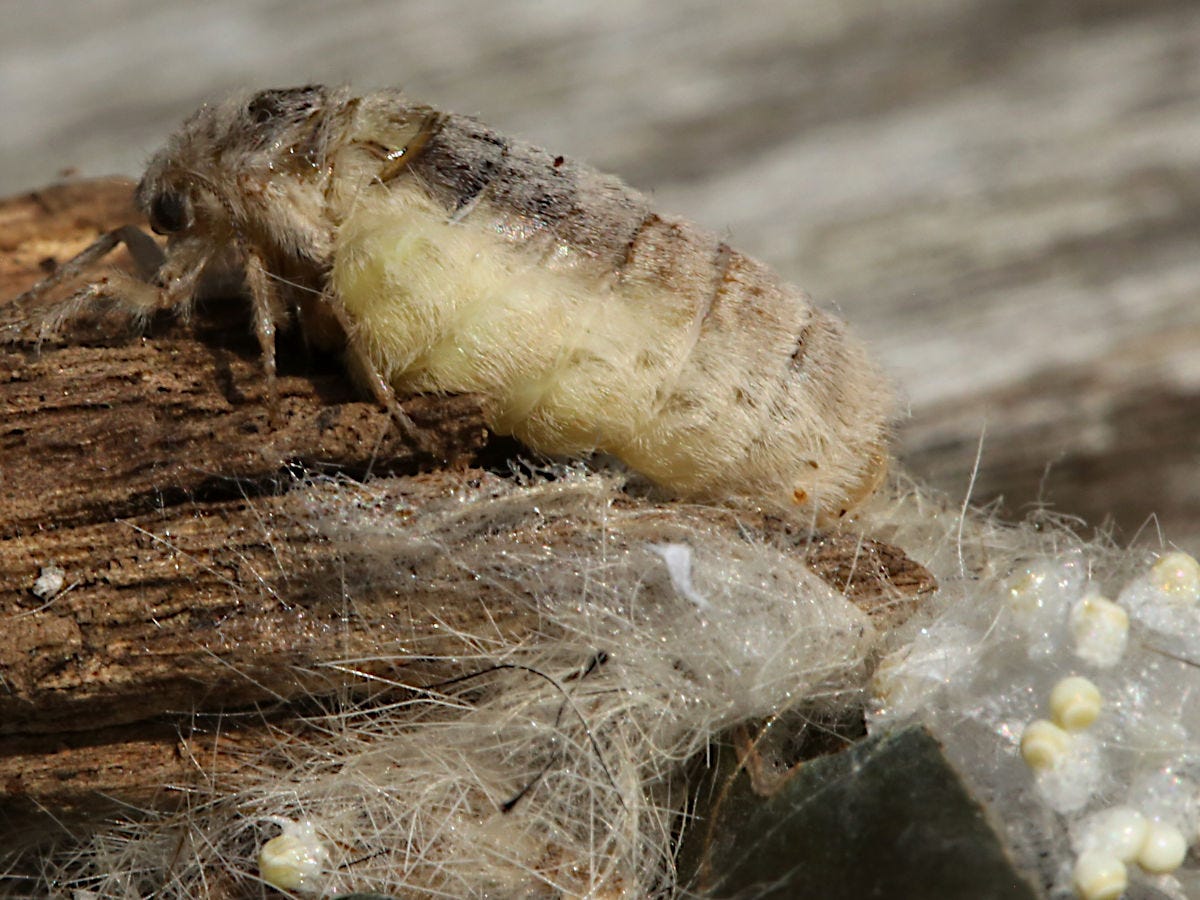
Speaking of cocoons, did you know that Tussock caterpillars build theirs with the help of their own protective hair? The reason is that those barbed setae then continue to protect the creature as it pupates inside the scratchy cocoon. Totally unappetizing to predators, I imagine. I had the pleasure of witnessing a Hickory Tussock friend making its cocoon and created a sped-up video of some of that process - so damn cool! Pupae overwinter, just as they did as eggs, in these cocoons, usually hidden among leaf-litter, before eclosing the next spring in their final form as moths.
Tussocks do not have mouthparts or digestive systems as adults, and therefore (I know you figured this out, my wicked smaht readers) cannot eat. Their energy comes from reserves stored during the hungry-hungry caterpillar stage. As you can imagine, the adult lifespan isn’t long, only about 7-14 days before they run out of those reserves and expire. Ideally during that time the moth was successful in reproducing, starting the cycle over for the next generation. And this, by the way, is why I think it’s important to respect the lives of even the smallest creature whenever we can. They deserve for that short life to be as conducive as possible to their evolutionary ‘calling’ as much as we deserve every chance to fulfill our self-prescribed purposes - mine partly being to shove cool facts about nonhuman life in your face on Substack. You’re welcome, and thanks for reading.
If you like learning lesser-known facts about nonhuman life and otherwise geeking out over science and nature, I invite you to subscribe! Thanks again!
Very informative! Great timing for me too, as being on the night shift for the past couple of weeks I've been photographing a lot of moths and caterpillars myself ... pretty sure even some of the western species of this very moth. I was unaware that these moths can't eat, although I feel like that's something I should have already known.