


Fair warning: You’re going to see the words ‘beak’ and ‘bill’ a lot in this article. It can’t be helped. Maybe turn it into a drinking game.
Have you seen that meme going around about knowing you’re old when you start getting excited about the birds in your yard? If that’s the benchmark, I’ve been an Old for as long as I can remember.
Here in New England I get the pleasure of seeing some beautiful birds. Blue Jays, Cardinals, Bluebirds, a variety of Finches and Woodpeckers and many more come to my feeders.
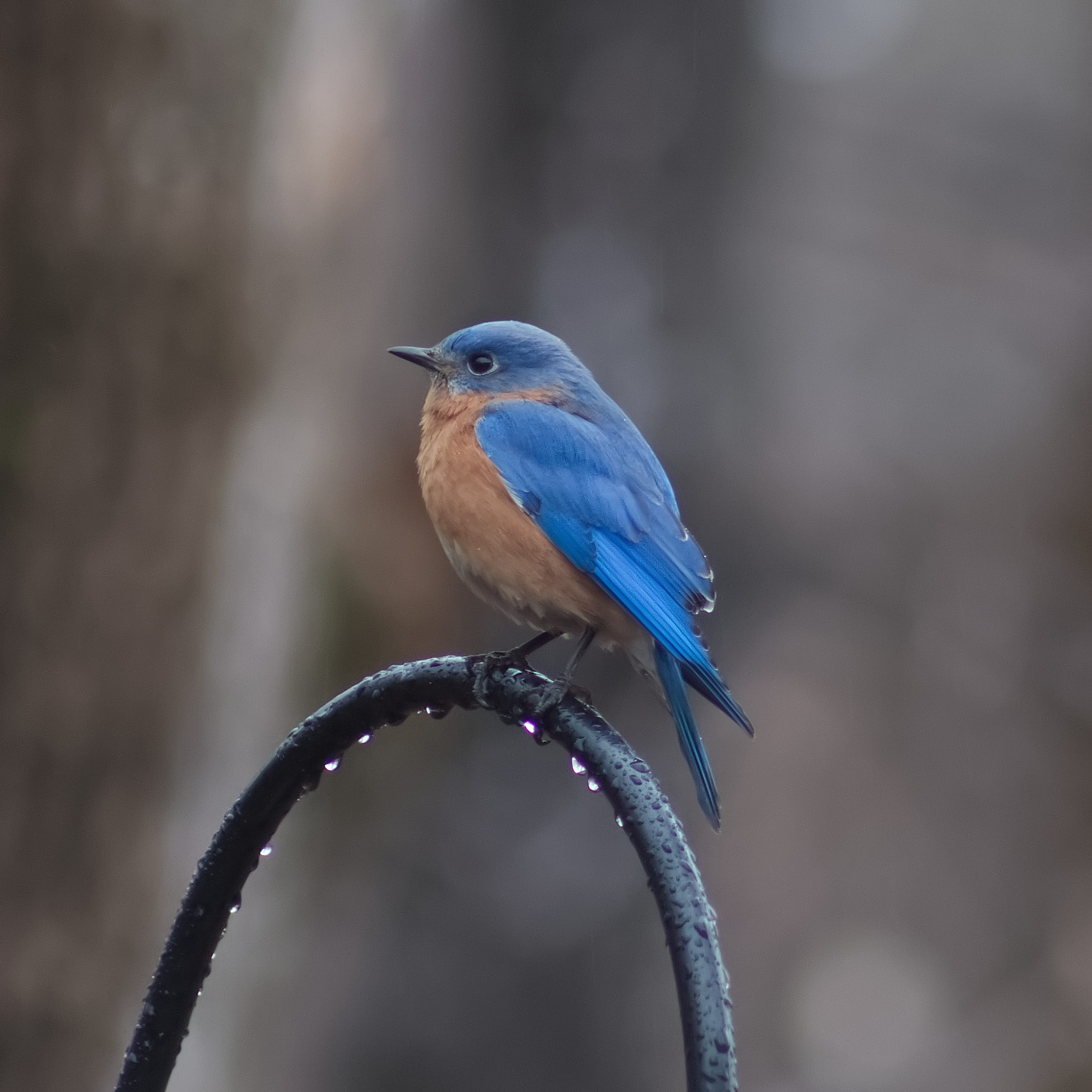
One common visitor is the White-Breasted Nuthatch. This feathery friend is most easily identified by its tendency to walk upside down on tree trunks, craning its neck to look up and around. They mostly eat insects, but also enjoy seed and suet. Like all birds, the ability to eat properly depends on a healthy beak.
Enter Beaker.
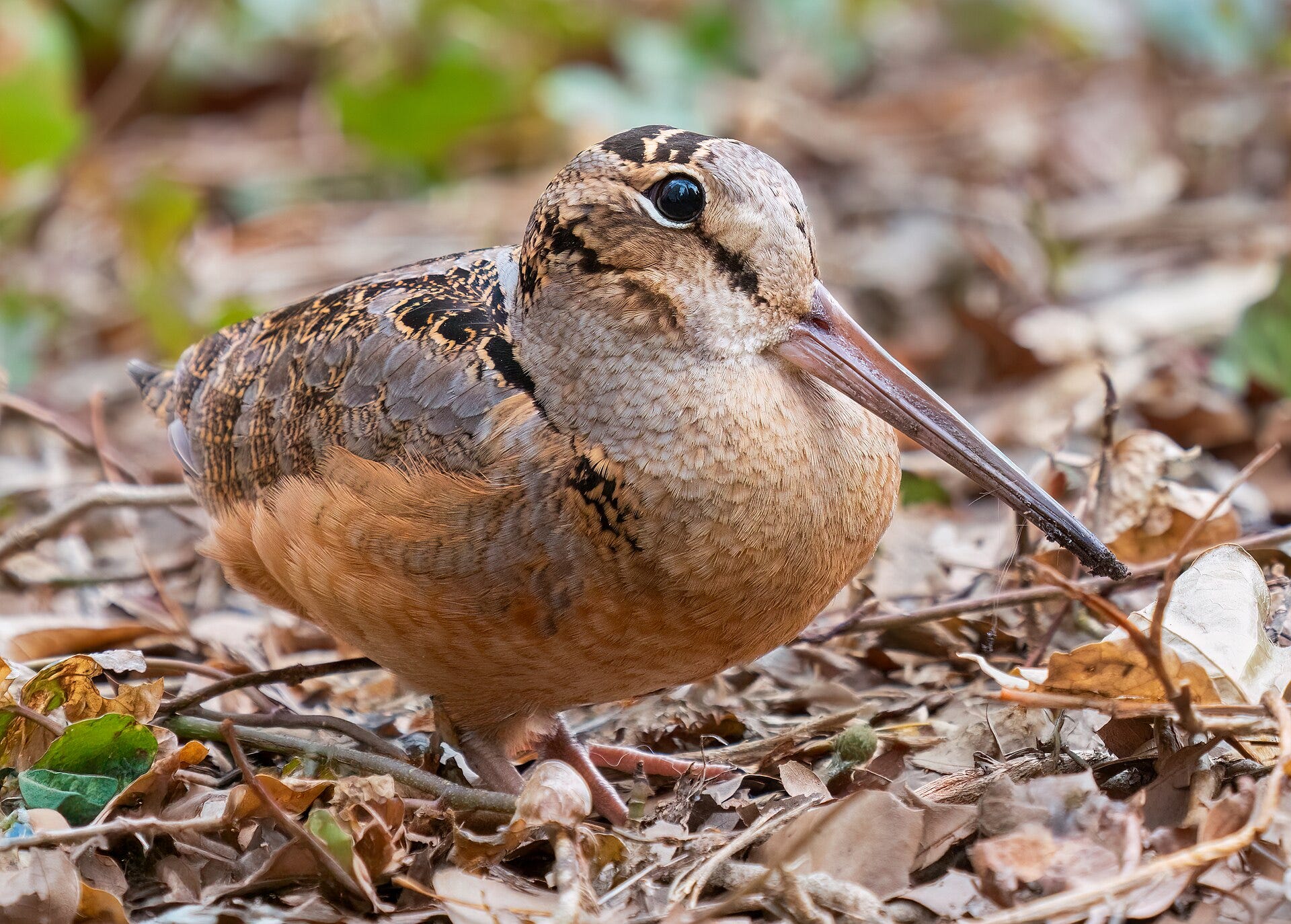
When I first saw Beaker on our feeder, I excitedly called for my partner thinking we had an unusual new species to admire. This unfamiliar visitor had a bill that reminded me of that of the American Woodcock (also given the goofy nickname ‘timberdoodle’ as if Woodcock wasn’t bad enough). But, birds like Woodcocks don’t fly up to bird feeders - those long bills are used to probe the soil for earthworms, keeping their interests focused toward the ground.
.jpg)
What the hell is this bird? I thought.
I took some fuzzy photos through the window screen with my phone and performed a reverse image search.
No way, that’s a Nuthatch??
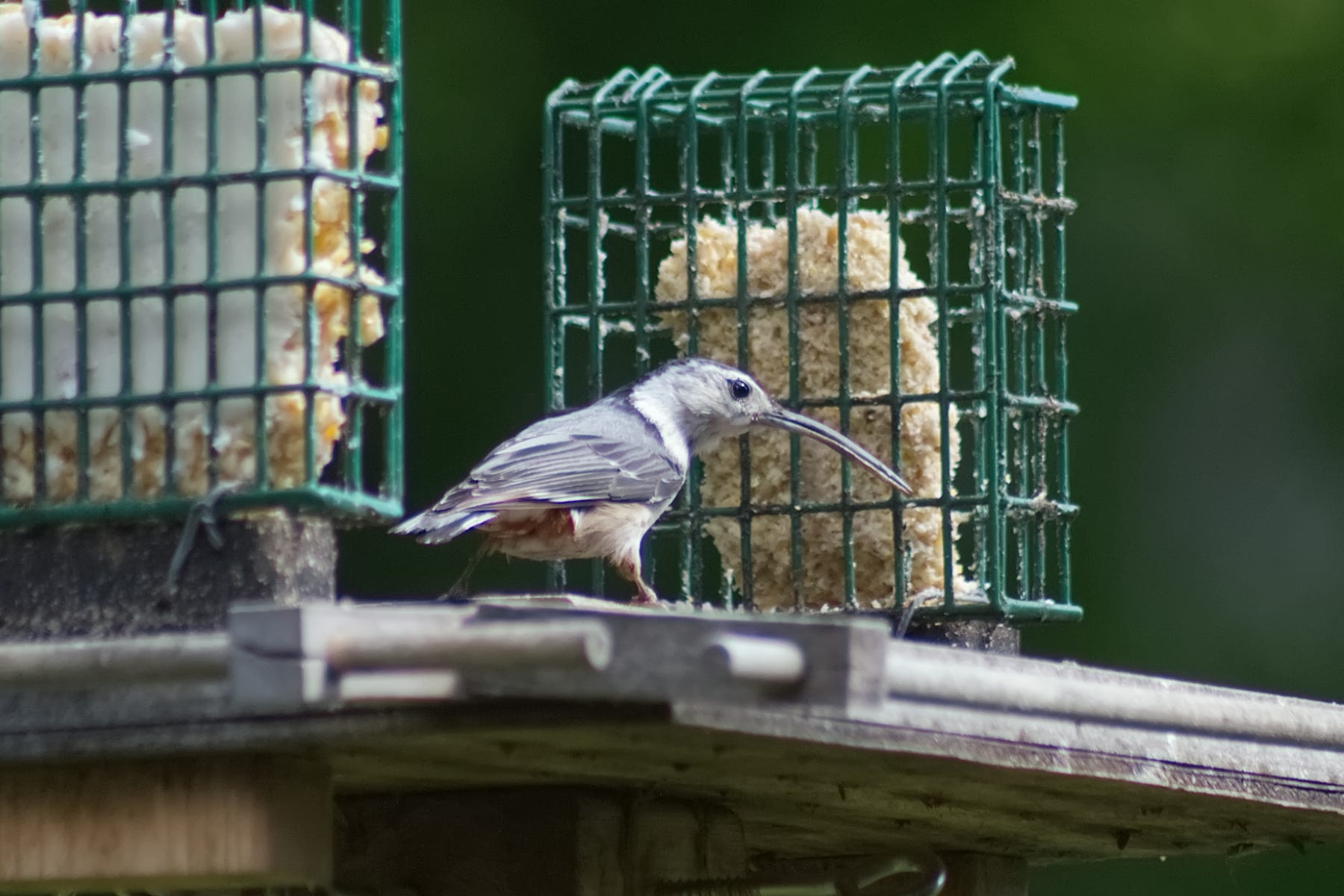
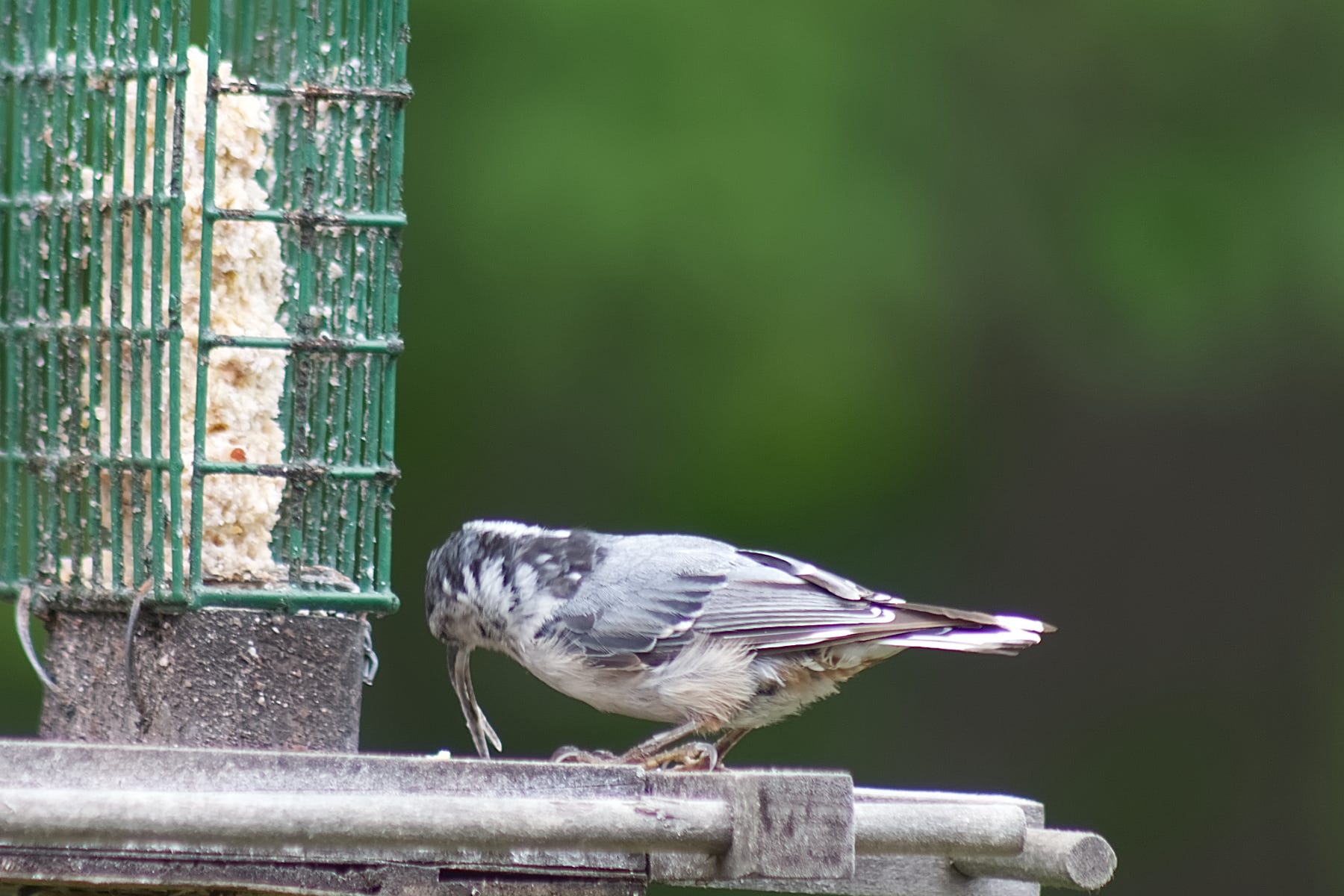
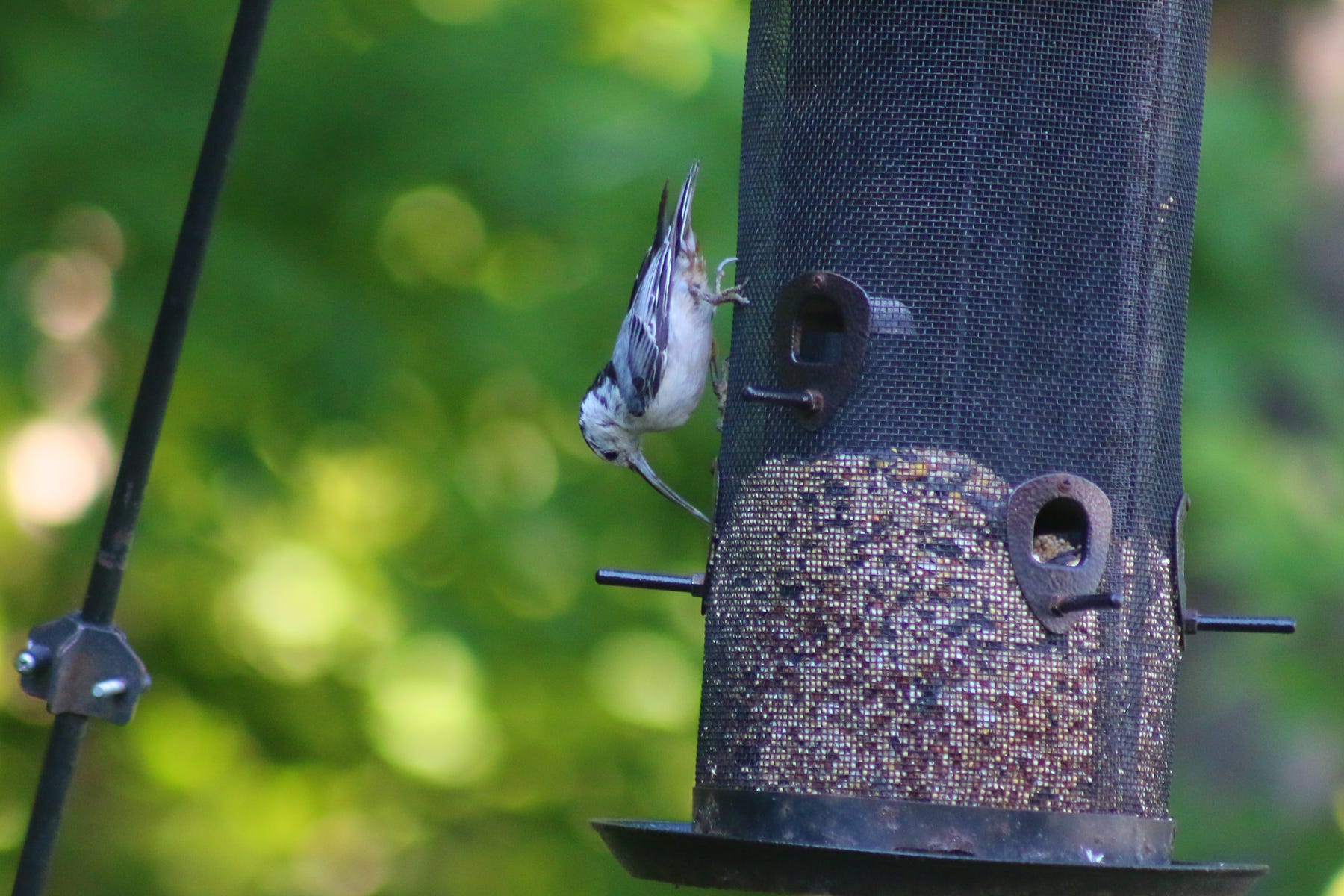
We continued to watch the little bird, whose beak was about as long as its body, and were able to better recognize the hallmarks of the White-Breasted Nuthatch species. Aside from the obvious beak-wonk, all other parameters - blue-grey, black and white coloring, small size, busy behavior - matched up. She seemed otherwise fine, but needed to tip her head to the side and use her extra-long mandibles to scoop seed into her mouth, or if she managed to get a chunk of suet, she’d tip her head back and let the piece roll in. Clever girl. But it was also a sad thing to witness. Can you imagine, say, trying to feed yourself popcorn with oven mitts on your hands? Forever? Not a good time.
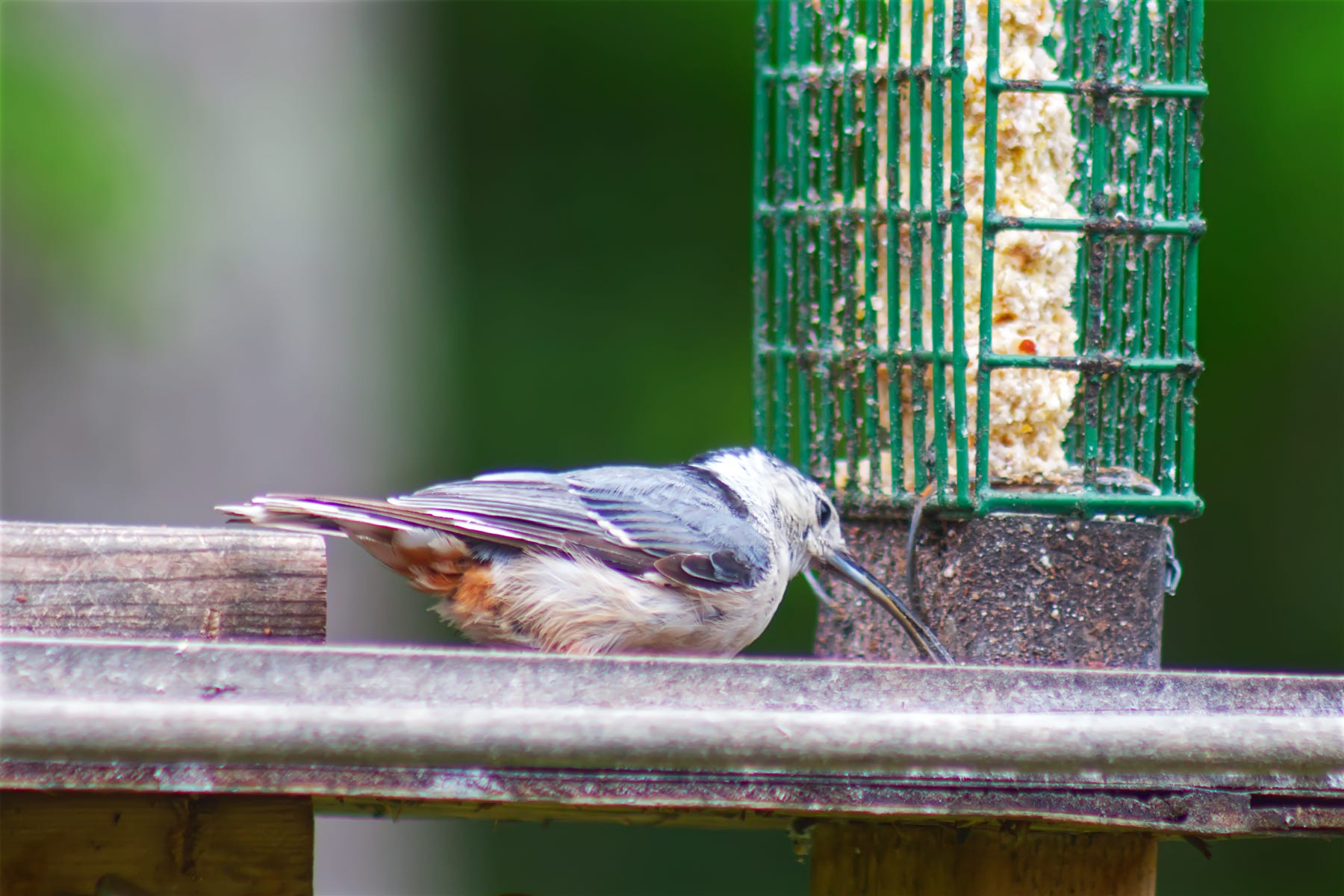
I don’t think I need to explain why we named her Beaker. Nor why I I had no choice but to research the shit out of this anomaly.
First, let’s go over the characteristics of a normal Nuthatch bill and how it’s used. What our friend Beaker should have is a shorter, chisel-like beak which she’d use, among other things, to wedge acorns and nuts into the bark of trees and then whack ‘em with the sharp tip of that chisel in order to…wait for it…hatch out the nut.
Get it? You get it.
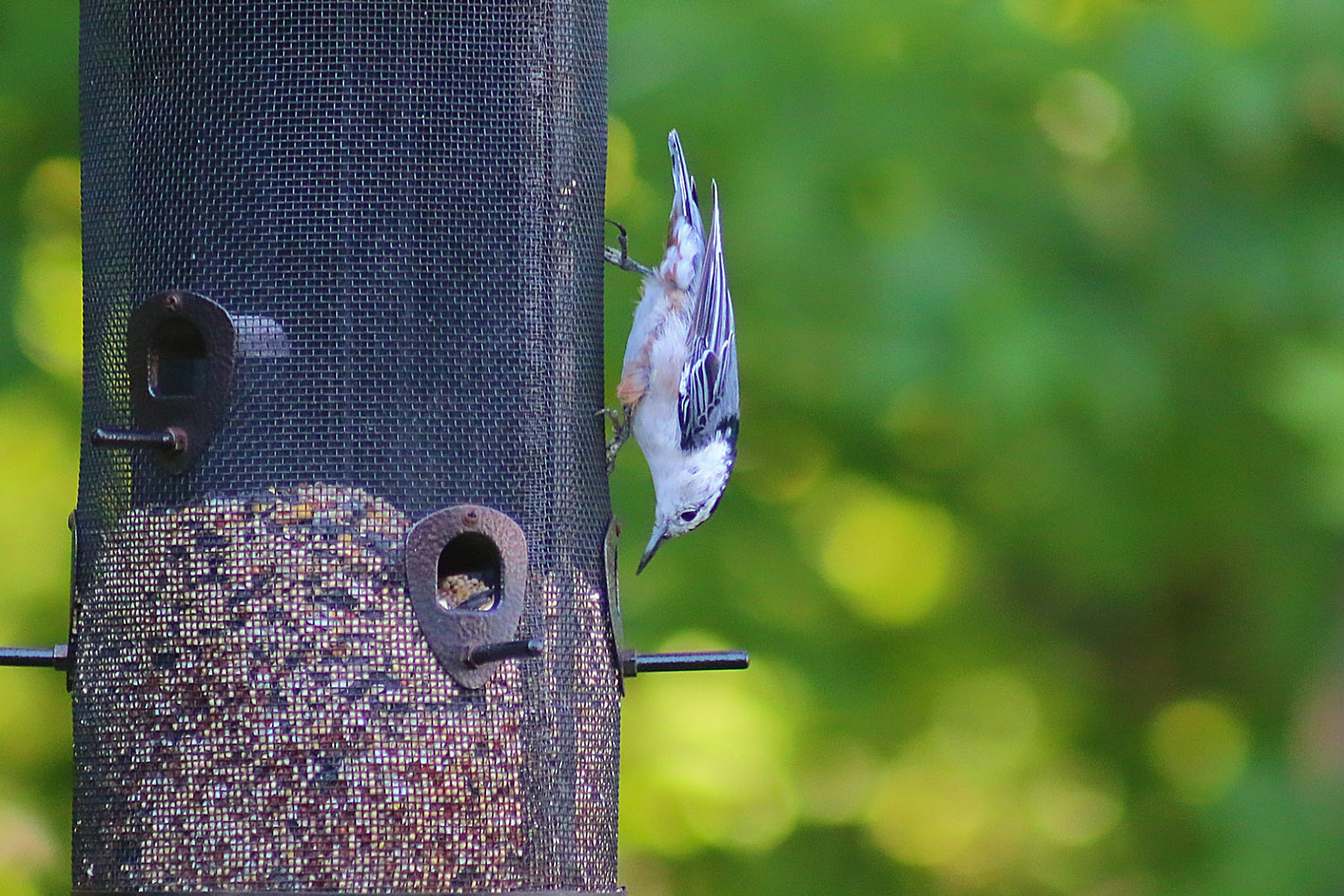
Miss Beaker’s elongated bill was not only disproportionate, but slightly maloccluded (misaligned) at the tip and appeared possibly more brittle than a healthy beak. My first two thoughts were that this was either a genetic defect or an acquired disease. My research led me to believe it’s quite possibly the latter. Namely, Avian Keratin Disorder (AKD).
Avian Keratin Disorder is best characterized by the keratin layer (rhamphotheca) of the beak growing about double the speed of a healthy bird’s, meaning regular pecking and feeding doesn’t wear it down as fast as it grows. Aside from the physical traits females with AKD have also shown erratic nesting behavior, but it’s not yet known whether this has more to do with physical limitations or some kind of hormonal factor.
As for the cause of Avian Keratin Disorder, it’s been strongly linked to Poecivirus among Alaskan populations of Black-Capped Chickadees, but is still being studied. Genetic disease is still undetermined since AKD appears to develop in adulthood (it can be tough to keep track of chicks once they’ve left the nest and connect them to a parent with the disorder). Nutritional deficiencies, parasites, and industrial contaminants (good job, humans) have also been considered as possible contributors to these beak abnormalities.
Researchers in Alaska have noted a clear increase in AKD since the 1990s, but the condition does exist less commonly elsewhere. Black-Capped Chickadees seem the most widely affected in the state, though the Alaska Science Center also lists other species like Red-Breasted Nuthatches - but not White-Breasted like our friend Beaker.
Still, if the beak fits…
I sent in a report to the Alaska Science Center about Beaker in case she is somehow connected to the Alaskan phenomenon, but there’s no way to know for sure at this point. If instances of AKD are indeed increasing and expanding geographically, this is worrying. My backyard visitor will likely have a shortened lifespan as she becomes less able to cope with the overgrowth, since it often leads to malnutrition among other problems, and she certainly does not deserve to suffer. And if the cause of her deformity is rooted in a virus, she could be a vector for its spread.
I can only hope little Beaker thrives for a long time and that perhaps her particular problem is not transmissible. She must have to put in so much more work to survive, and if I had a way to help fix her, I would in a heartbeat. The best I can do is continue admiring her and her ability to compensate for the challenges she faces with feeding and make accessing seed and suet on my property as easy as possible.
Good luck out there, Beaker. Your existence has value.