


Note: I’m aware of the conflicting opinions on keeping a butterfly that can’t fly as an indoor ‘pet,’ and I actually agree with the recommendation not to do so if you are unable to provide a life for the creature far beyond placing it in an enclosure with some sugar water. I am not that type, if my enthusiasm didn’t come across in my previous post.
Other than the startling look of Zap’s disfigured wings, the little guy was doing great. He was steady on his feet, alert, and eagerly ate from a cotton ball soaked in apple juice with his curly proboscis. He sat calmly in a patch of sunlight on the porch, slowly flapping those useless wings. He was beautiful.
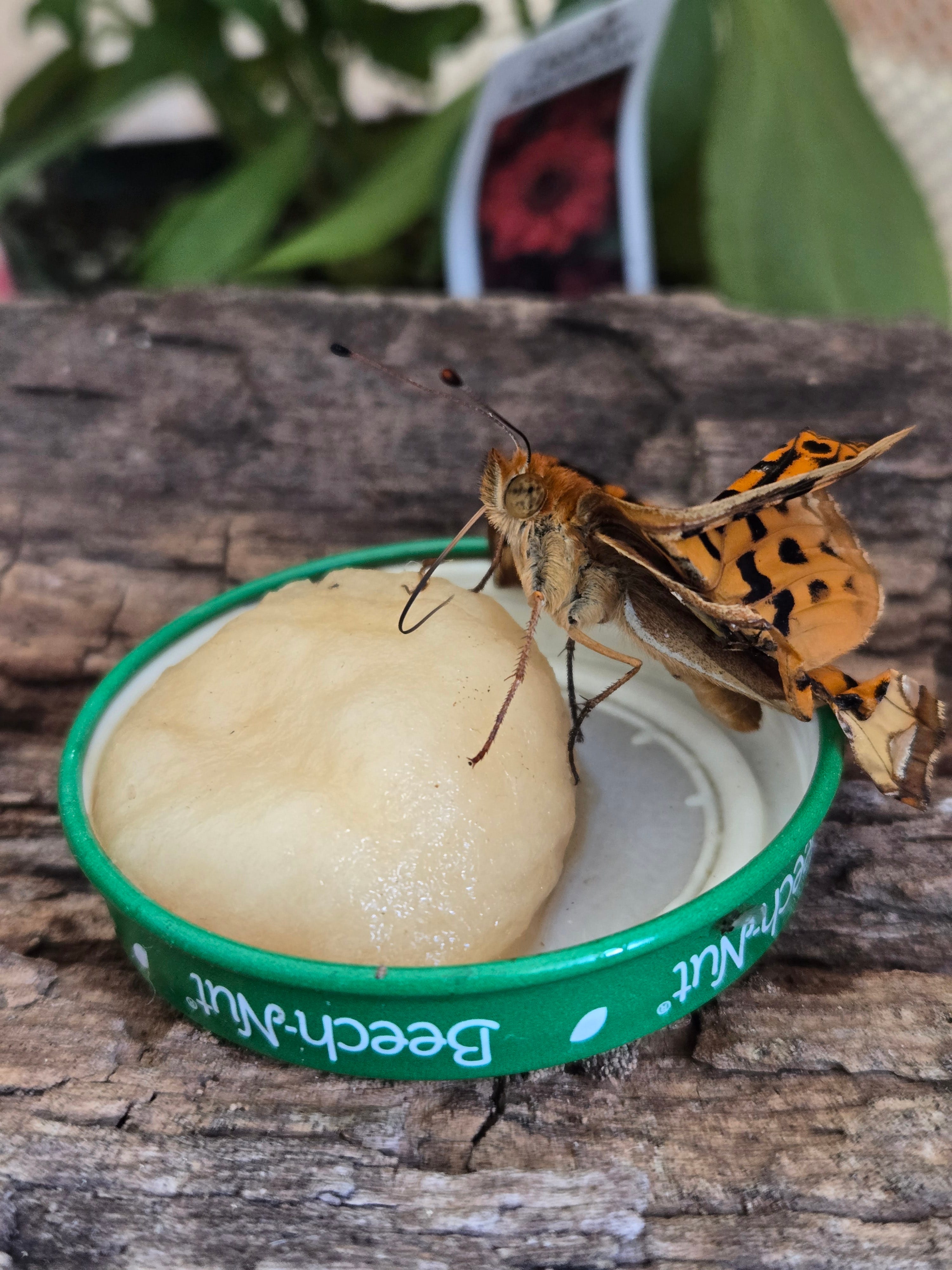
Over the course of that first day, I obtained for my new Butterfly Son a variety of food options ranging from organic juice to overripe fruit and even took a special trip to a local greenhouse for some zinnias - a preferred flower of Great Spangled Fritillary butterflies. I bought one of those mesh pop-up hampers as a makeshift enclosure for the nights, and picked out the perfect little log from our wood pile to act as his dinner table. Obviously it didn’t take long for me to fall in love.
I continued to examine my little friend for any other problem areas from his dramatic debut, and pretty much everything else about him seemed intact. Except…
Does this guy only have four legs?
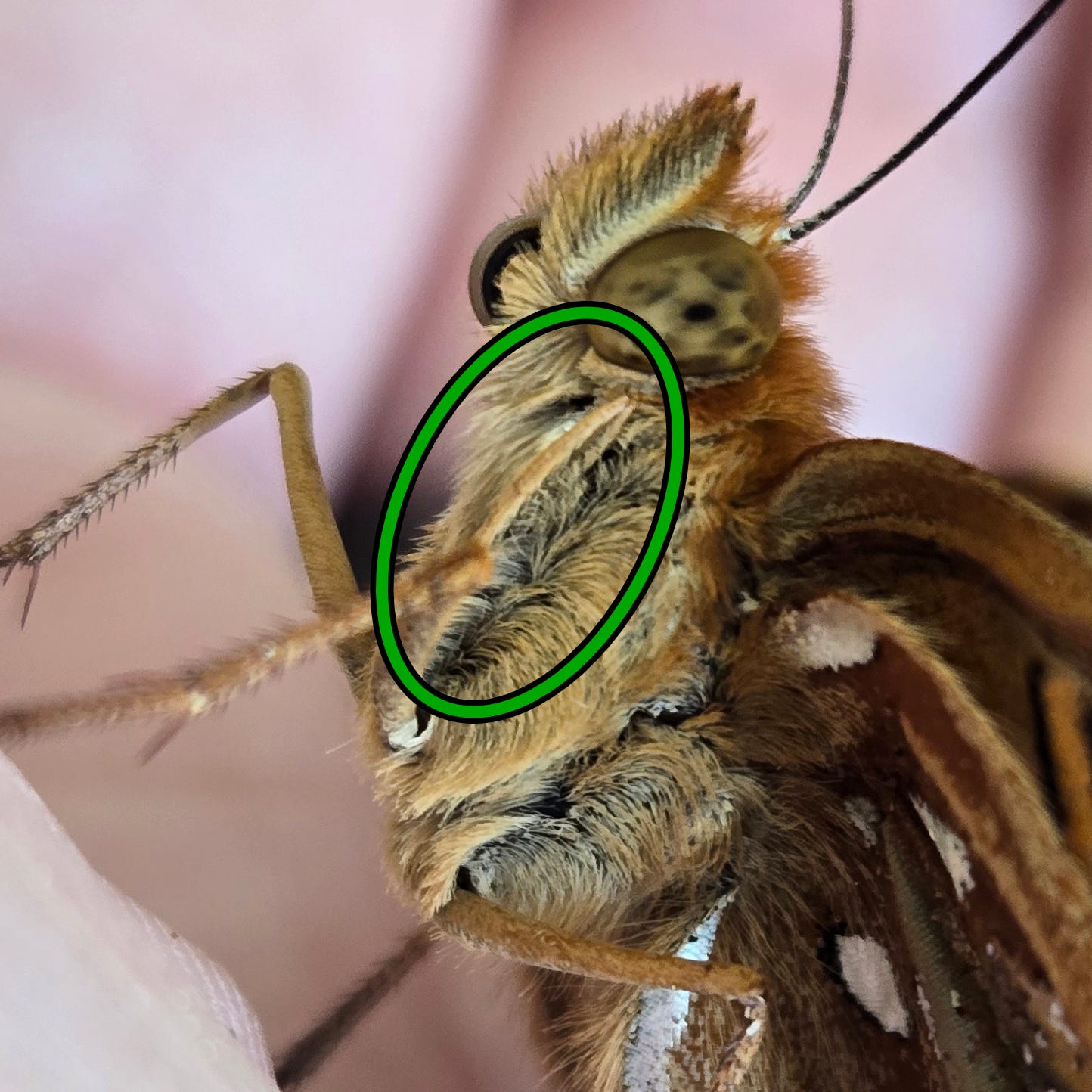
Well, turns out, there are some species of butterflies that are brush-footed. They’ve got four long legs for walking and perching and their front two legs are short, fuzzy, and generally stay tucked against the body. These feet are used for smelling and tasting. I’m telling you, the wonders never cease!
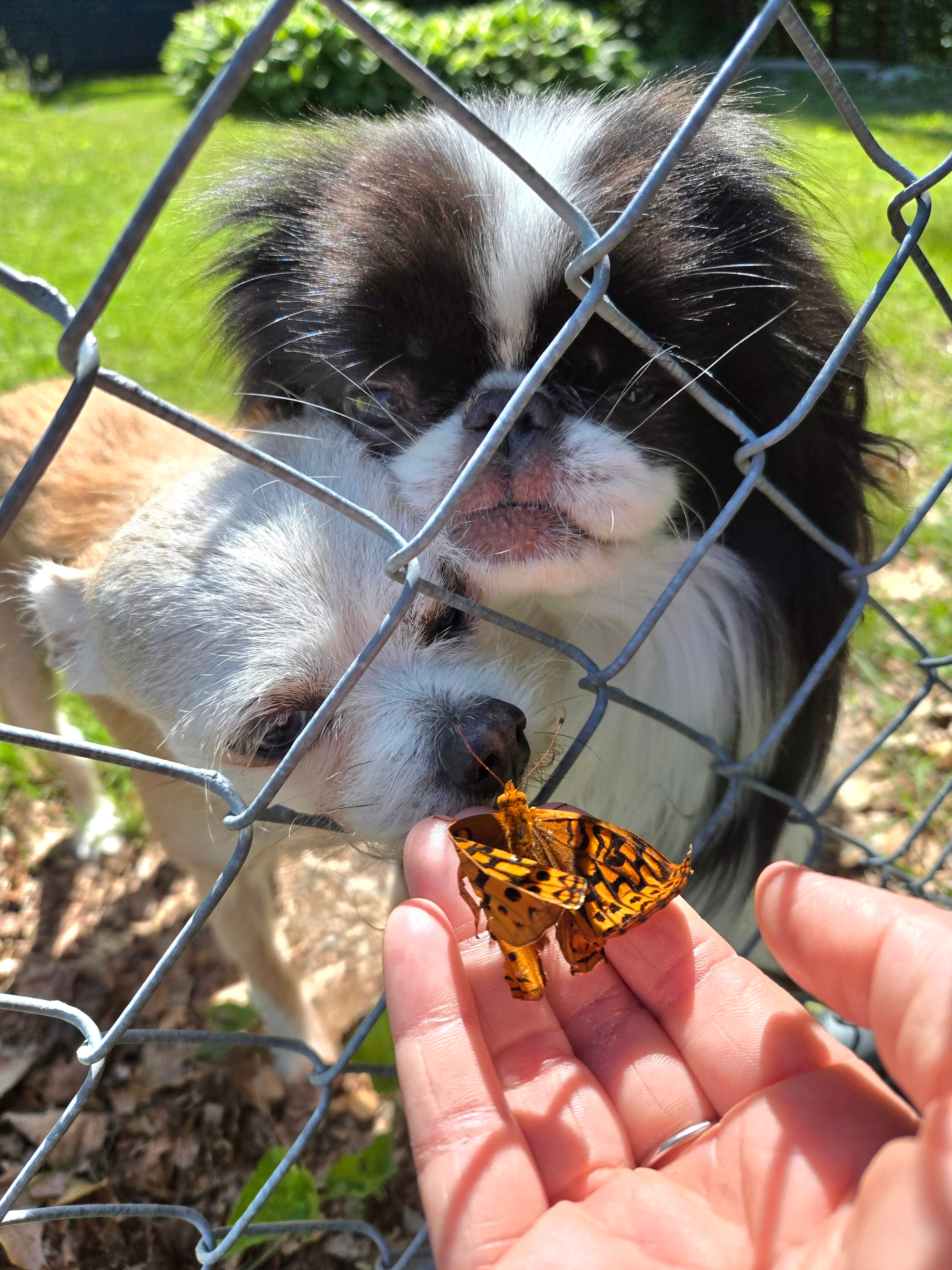
My research told me that Zap’s butterfly life would last for two to four weeks in the best of circumstances, and I wanted whatever time he had to be comfortable and enriching. That meant multiple trips to the garden every day. It was so rewarding to watch him excitedly probing at a new marigold, extracting as much nectar as possible. I would hold him up in the sunlight and he’d do that slow flap of his wings that I interpreted as contentment. I’d help him cling to the flower at the top of a tall chamomile stem, riding it as it swayed gently in the breeze. He even (safely) met two of his dog brothers.
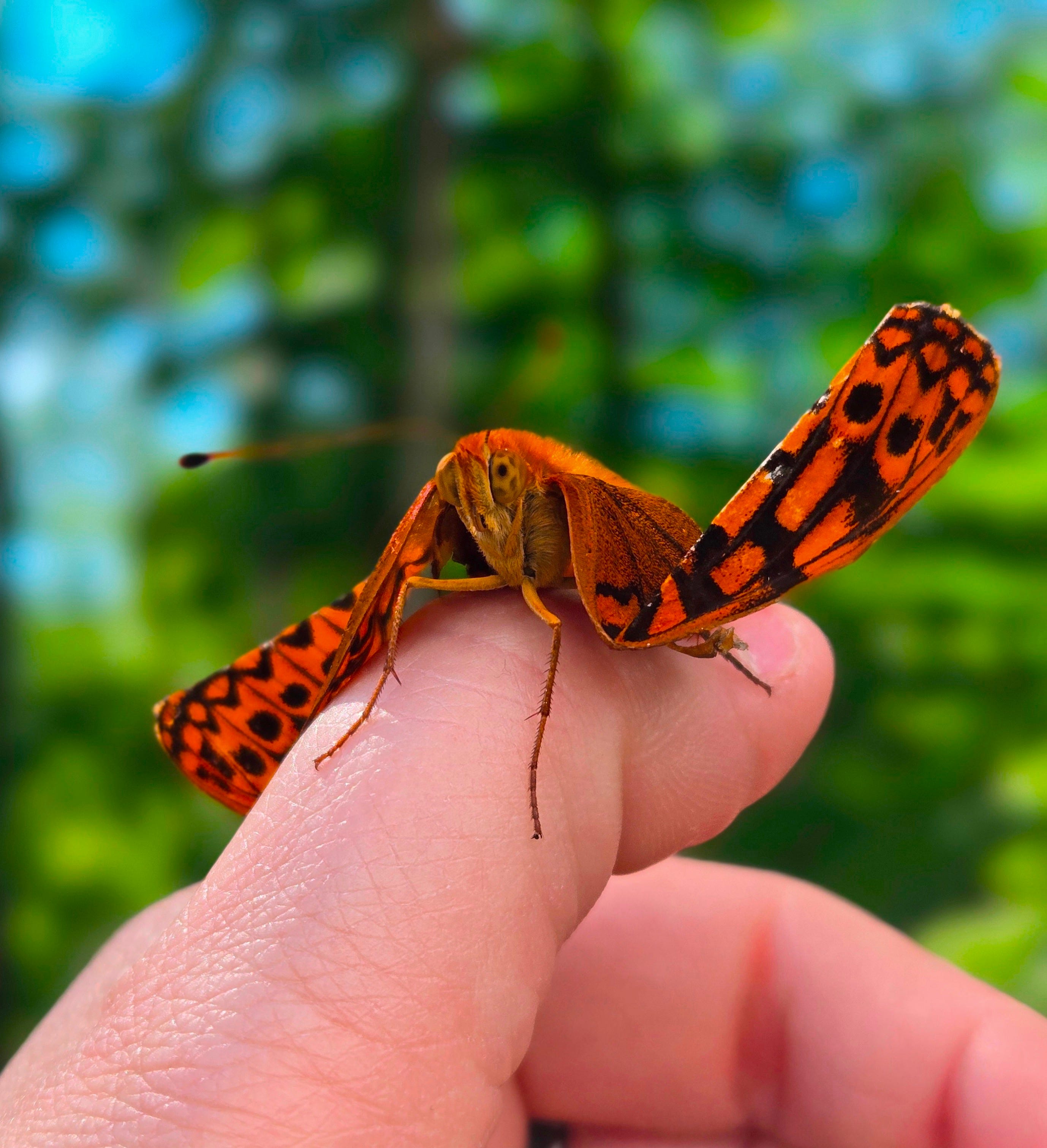
Indoors, Zappy had free reign of the enclosed front porch until he was safely tucked in to his hamper for the night. He had plants and twigs for perching, offerings of apricots, strawberries, apple juice, and cherry juice. I swear he made a face when he tried the cherry juice and quickly declined any more. I think the apple juice was his favorite.
Once, when I was having trouble figuring out what Zap was hungry for, I noticed he was swiping at my skin with his proboscis. I remembered something about butterflies gathering at mud puddles (adorably called ‘puddling’) to ingest needed minerals. I collected some of our finest compost and made him a sort of mud pie, which he immediately went for.
The routine went on for several days, and in that time, Zap’s sister Zip was still in her caterpillar stage. I figured they must not have actually been from the same hatching even though I found them near each other, but I decided to do some research anyway. That’s right, more kick-ass butterfly facts incoming!
At the time, I had no idea the sex of Caterpillar Zip, but my research suggested that she was in fact a female, and indeed very likely from the same clutch (deposit of eggs) as Zap. Her late-seeming progress was completely par for the course because the males of her species evolved to go into chrysalis and emerge around three weeks before the females. Why? Reproductive advantage, of course! In the wild, males spend this time patrolling the meadows and fields and establishing flight patterns for finding a mating partner. When the female ecloses from chrysalis, she is almost immediately ready for mating, and the male is waiting. They call this phenomenon protandry.
So, we were now nearly a week in to Zap’s butterfly life. Those wonky wings of his continued to take damage from tumbles off flowers and attempts to fly from my hands. His legs were starting to get looped in a couple of the holes in the chitin membrane causing him to flail, which caused more damage. I started finding Zappy on his back when I’d check on him on the porch. His quality of life was declining.
Back to the internet.
Do butterflies have pain receptors in their wings?
No.
Can I trim a butterfly’s wings with scissors?
Yes.
This was a last resort. Maybe if I trimmed the parts of the wings that were tripping him up, Zap could stay upright. I carefully snipped away the parts that touched the ground. His legs weren’t getting tangled anymore…but he was still ending up on his back. I wanted to give it time enough to know if there was a chance but not so much to prolong any suffering.
It didn’t work. Zap would end up on his back pretty much any time he was on his own. I knew had to do the right thing. The heartbreaking thing.
I took my Butterfly Son out to the garden one last time. We visited every flower. I let him wander on the ground among the grass and clover, and found him a nice warm patch of evening sunlight to soak up. I took a few final photos of this beautiful, valuable creature.
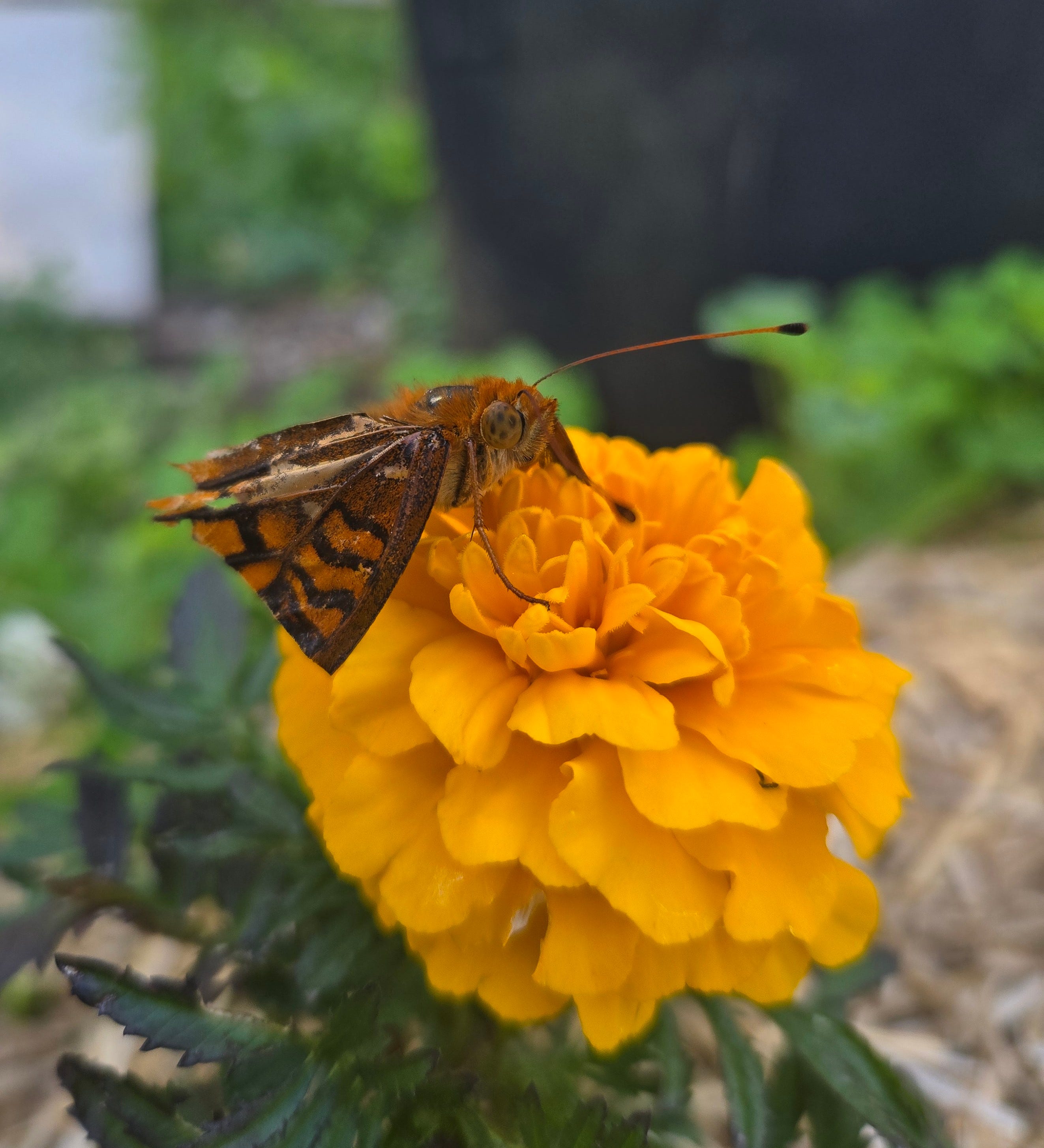
It took me a minute to commit to my decision, but as little Zappy calmly clung to a paper towel, I gently folded it into a loose envelope, and placed it in the freezer. His metabolism would slow and he would fall into sleep and slip away. The next day I buried him in the garden with the blossom of his favorite marigold…
I cried. Multiple times. Snot was involved. I am not ashamed.
Zip finally went into chrysalis a few days later, and emerged perfectly after a couple of weeks. She was a fine specimen, and I was so happy to watch her confidently fly off into the world. I wish she could have met her brother, and I wish even more that he could have gone out like her to experience the freedom of flight and follow his instincts to procreate, but I will forever treasure his life as it was.
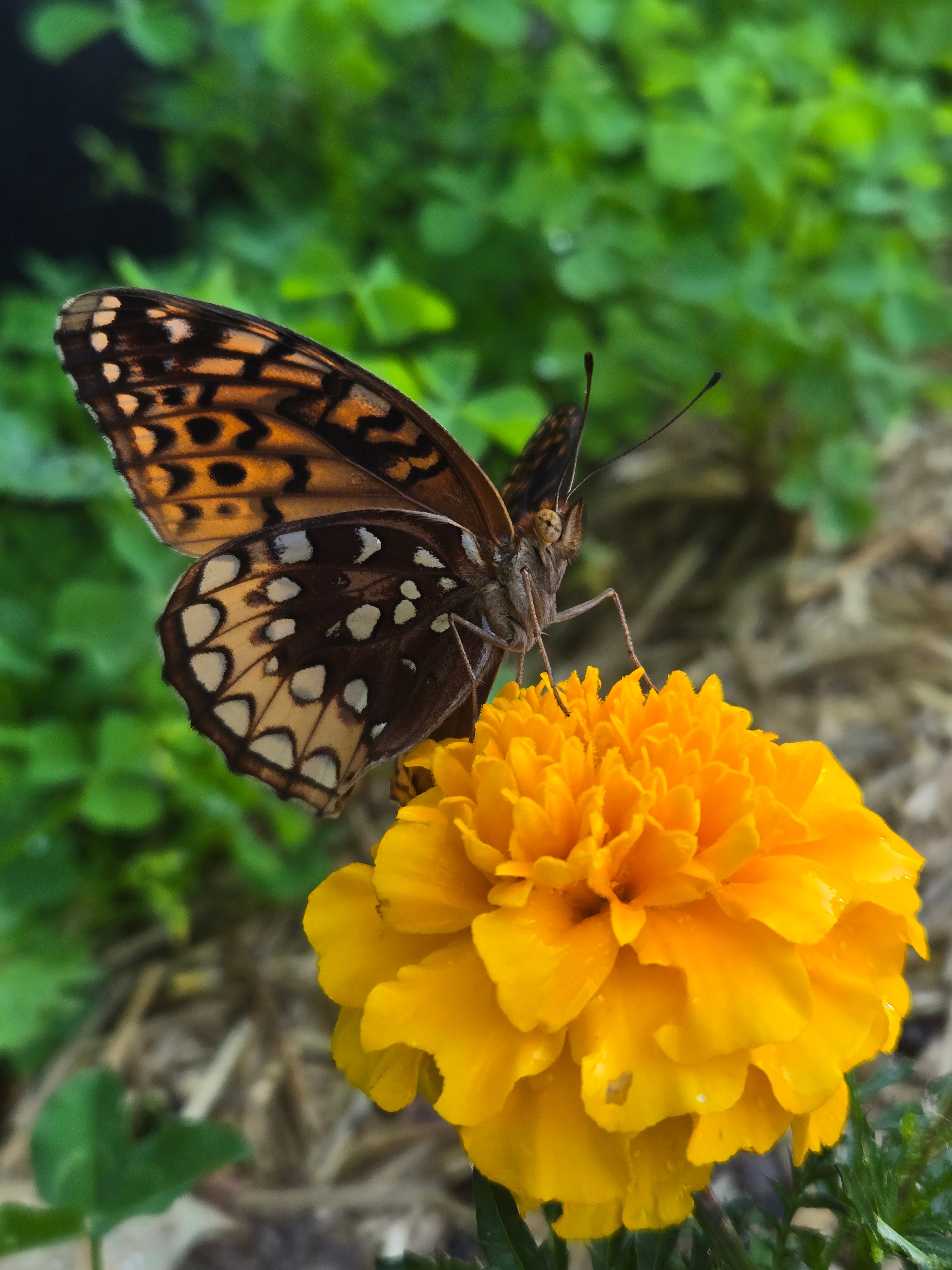
Friends, I learned a lot of fascinating facts thanks to my time with Zap and Zip, Maybe more importantly, I learned that I need to be less impulsive about my nerdy enthusiasm for interacting with nature in this way. Had I left these two caterpillars where I found them, or even been just a little more educated before taking them in, chances are Zap would have had a routine emergence and lived out his life as evolution ‘intended,’ for lack of a better word. I mean, his existence had value whether I knew him or not. As for my regret for the path I unintentionally set him on? It exists alongside my utter joy in caring for him. He was worth it, tears and all.
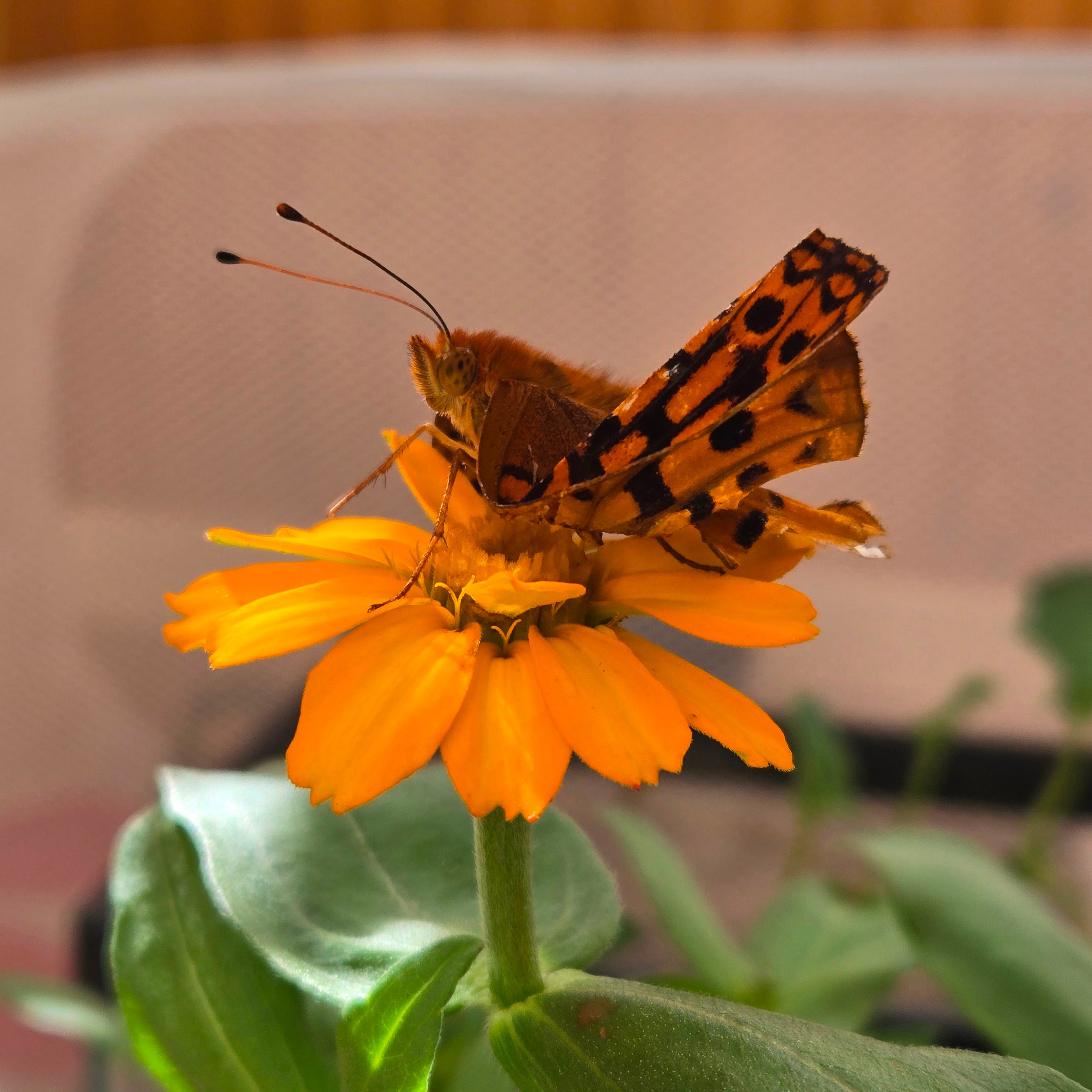
Remember to subscribe so you don’t miss a post! If you fell in love with Zap (and Zip) the way I did, you can see videos, more photos, and get discounts on original Zap and Zip merch when you sign up for a paid subscription.