


Dear readers, I want you to close your eyes and picture a Shih Tzu-Pekingese-Russell Terrier with a little Supermutt and Yorkie mixed in.
Reeealllllyyy concentrate.
Got an image?
Now, remove a leg. Trust me, it’s fine.
Okay. Brace yourself…
Here she is: Lenore!
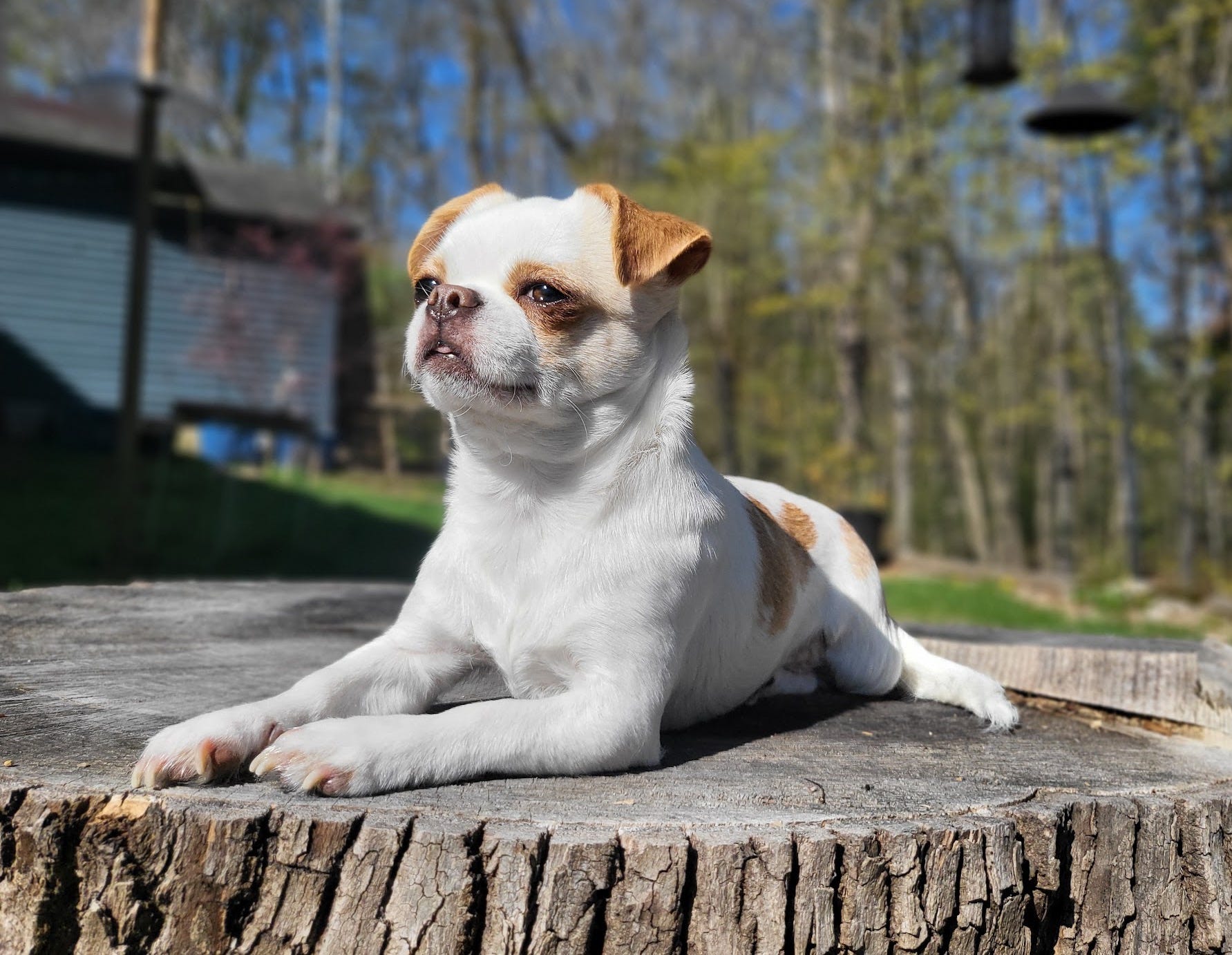
Adorable, right?? My partner and I certainly thought so, and back in the autumn of 2023 we had lost a very special member of our family, leaving a giant hole of love (ew?) to fill. We adopted Lenore (originally called Pebbles) from down south after she was found with a serious degloving injury to her left hind leg, requiring amputation. We simply can’t resist a strange, old, or special-needs critter so, by December we had her home, newly healed from surgery. She was quite hesitant on our non-carpeted floors for the first few weeks, basically scrambling between pet bed ‘islands’, but now she is so adept on her remaining three legs that I sometimes forget she’s missing the fourth. I’ll occasionally ask myself why she seems to be limping before my brain kicks in to remind me. Lenore has been an excellent addition to our family. She’s sweet. She’s spicy. She’s seven pounds of pure muscle. Oh, and her favorite color is green.
“But, Meadow,” you say, “dogs can’t actually see the color green!”
Guys, I know. And yet…
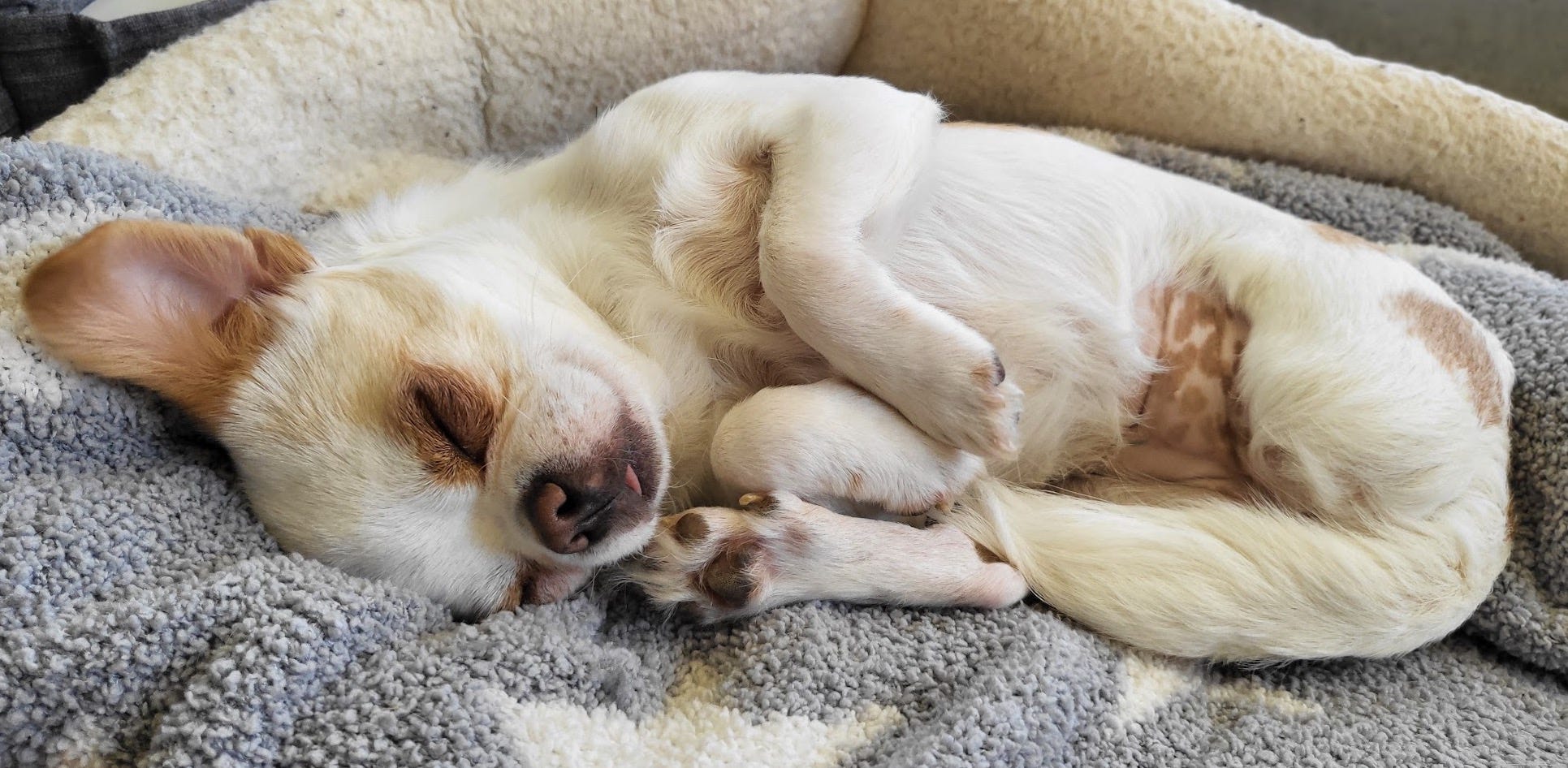
Time for some eyeball science: Let’s start with a few advantages dog vision has over humans. First, canines can see better in low light. There are a few reasons for this; one is that dogs have a tissue layer in the back of the eye called the tapetum lucidum (Latin for ‘bright tapestry’), which reflects light coming in back through the retina. Another reason is they have more light-catching rods than we do. And finally, dog pupils are able to dilate larger relative to their eye size than humans, again, allowing more light to enter. The trifecta of low-light vision!
Additionally, dogs have expanded peripheral vision because their eyes are wider-set than the average human. They also are better able to track linear motion like, say, a frisbee flying through the air, at a further distance than we can.

Alright, doggos, you win this round. But what might be some disadvantages of dog vision compared to ours?
A big one is simply visual acuity. That is, the sharpness with which one can see. Dogs are more near-sighted than we tend to be (though I definitely relate). They also are less able to shift focus from near to far - ever hold an object close to your face and deliberately focus on that object, then shift to focusing on what’s behind it and back again?
Just me? Okay.
The point is, dogs aren’t as able to do that because of differences in the location and size of the lens of their eyes. It becomes more difficult sooner for them as they age as well because the lens hardens to a greater degree over their lifetime.
So, perhaps humans win this round? Sounds like an evolutionary wash to me.
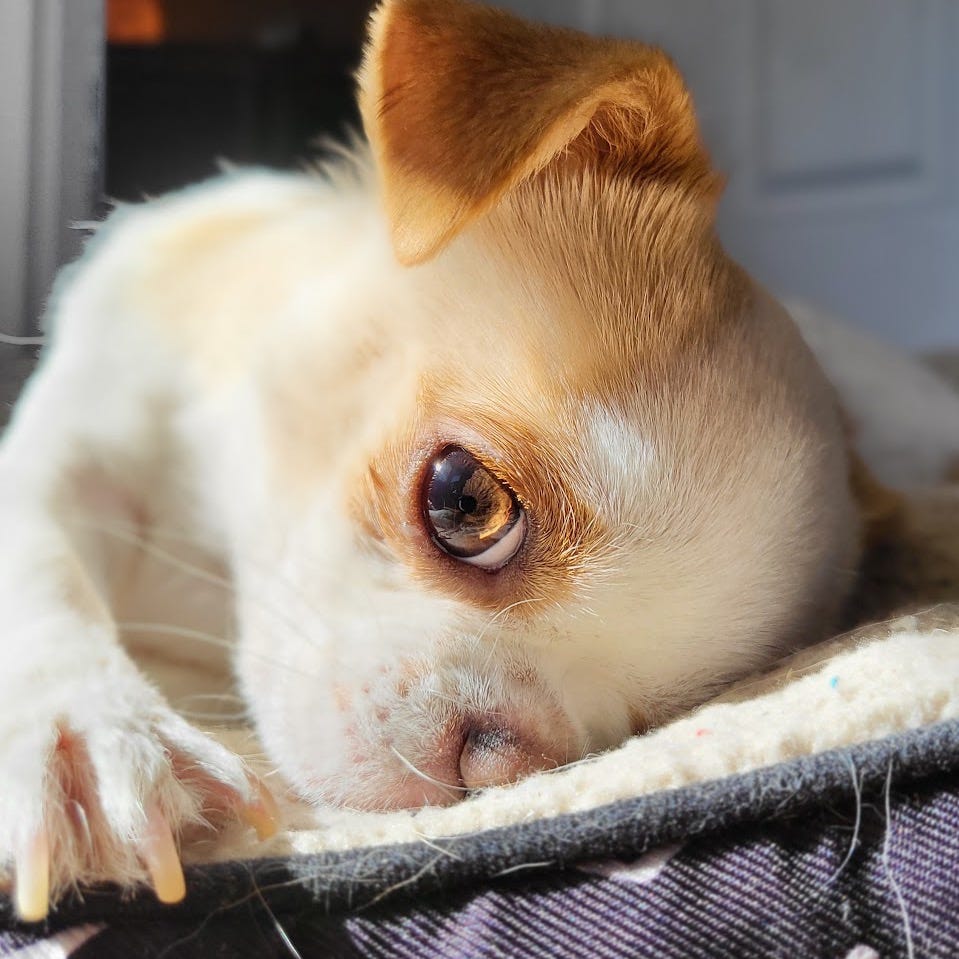
But the whole reason for this article was Lenore’s color perception, so let’s get into that.
Dogs have what’s called dichromatic vision, which means they have two types of color-perceiving cones rather than the three most humans have. Those cones can see blues and yellows pretty much as we see them, but reds and greens take on blue-grey or brownish yellow tones respectively. Here’s a great image that compares what we humans would see versus what a dog would see:
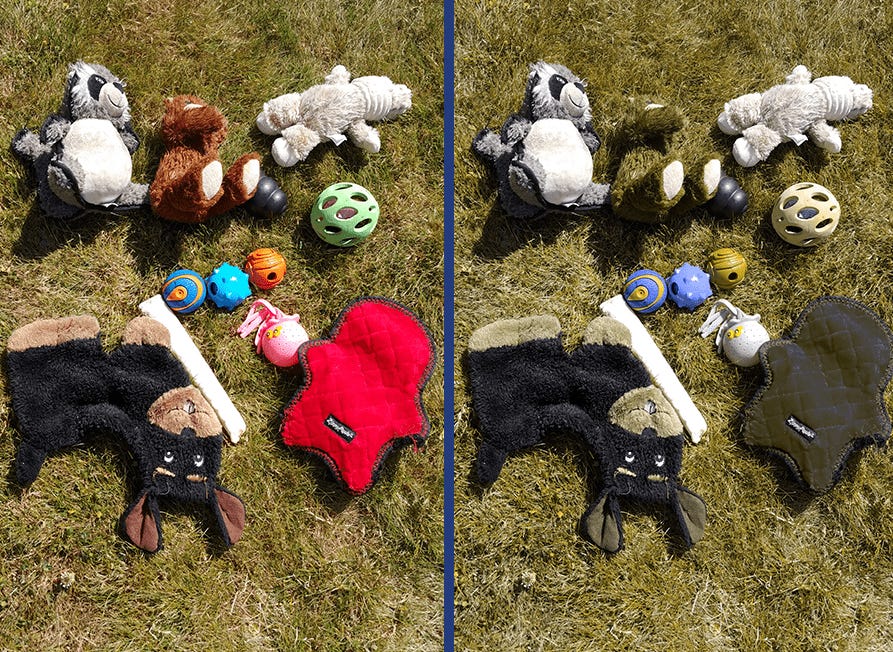
All of my research is telling me Lenore should be indifferent at best to the color green, but it truly appears to be her preference. How do I know? Enter the ball.
I discovered the summer after adopting Lenore that she LOVES to play ball. This little ZipZoom only has eyes for her ball when she’s in the back yard and she rockets after it, leaping into the air to catch it or bump it with her short little snoot like some kind of land dolphin until I have to scoop her up and bring her back inside before she overheats. Expert Lenore tip: don’t take the toy away from Lenore, lest she relentlessly obsess over getting it back. Instead, take Lenore away from the toy. For some reason, this is The Way.
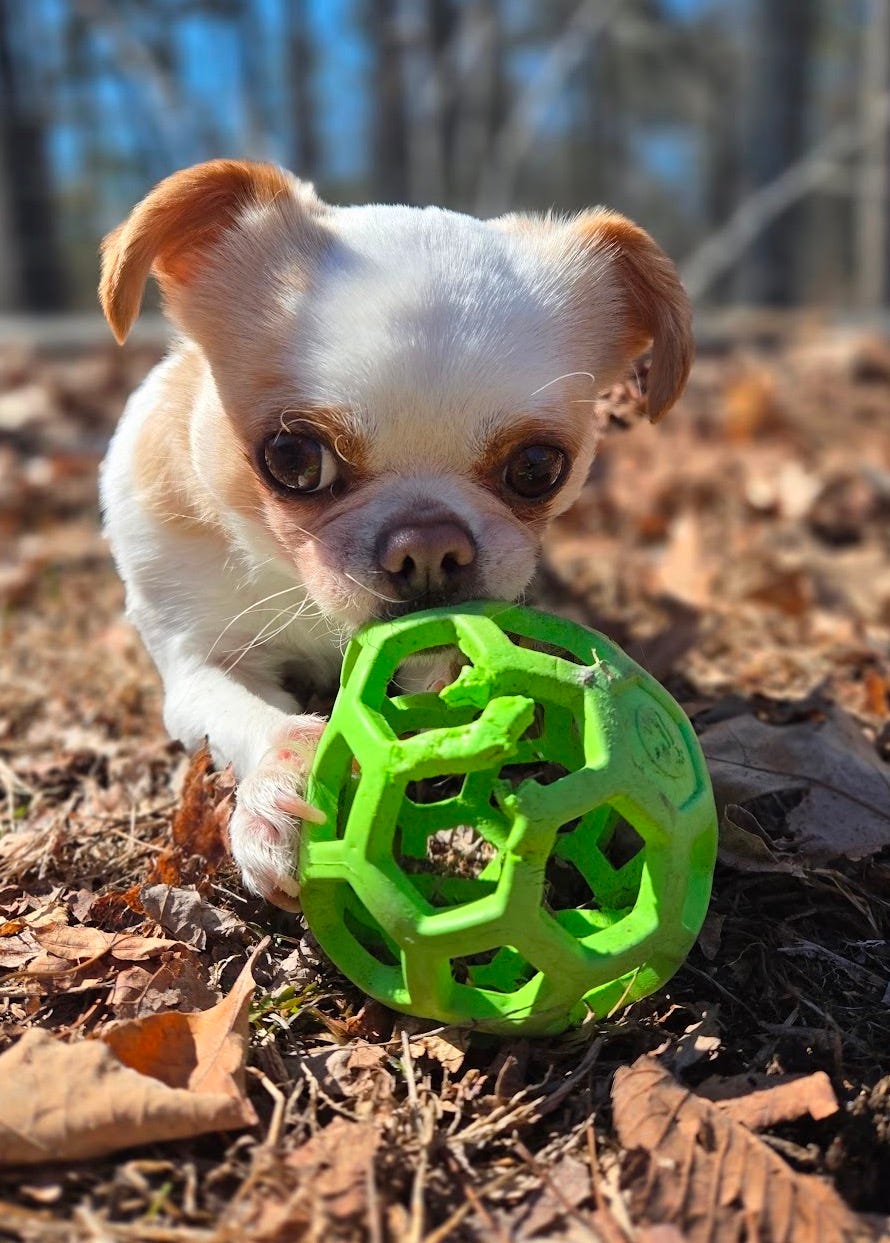
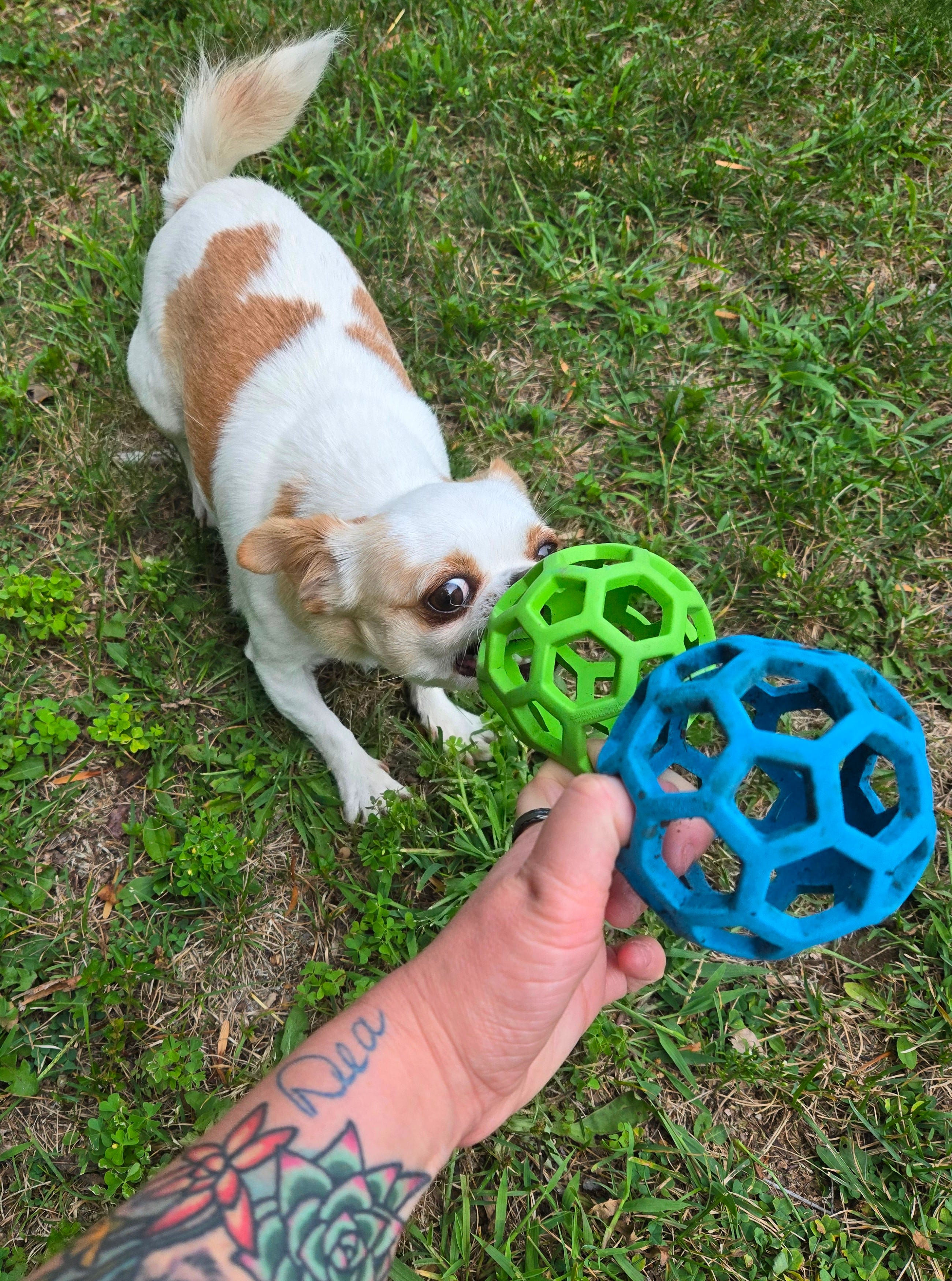
Lenore is also a master of toy destruction, so even though she loves to chase her ball, she also loves to ruin it, methodically chewing away pieces of its honeycomb structure until its useless. That means I have to buy new ones pretty often. At the beginning, I’d grab whatever color was available at the store, or pick one I personally thought was nice. But the moment I introduced Green Ball, it was all over. If there are two ball options in the yard, one green, one not, she exclusively picks the green. Try to replace the green ball with a different color? Newp, that’s not gonna work! She will look for Green Ball no matter how many times you throw the nongreen replacement. BUT! If I buy another green ball, even if it’s a different size, and swap it with her most recently destroyed green ball, she is totally fine with it. It’s unwavering and repeatable.
What the hell?
She doesn’t care for red the same way, even though she doesn’t ‘see’ that color either. Blue, the color that should stand out to her most in the yard, means nothing to her. I haven’t yet found a yellow ball to try, but I suspect I’ll get the same results. There are hypotheses that what may appear to be a color choice by a dog is actually a texture or smell preference, but I am using the same type of ball for each color and swap. There’s also a study that indicates color shade influences preference more than brightness. I’d be interested to find a ball of a deeper/bluer green to see if she would have a different reaction.
At the end of the day I haven’t found a science-backed explanation for Lenore’s need for green. I do know that I love seeing her happy, enriched, and active, so if Green Ball does that, I’m all for it.
Does your dog seem to have a favorite color? Which color? I’d love to compare notes and see if my Lenoreling is as unique in this sense as she seems to be. Comment, share, subscribe, and let’s get a little study of our own going - for science!
Do you also adore Lenore? Subscribe for access to bonus content including more photos and videos!