


Well, here we are dear readers, the last week of October. Halloween is mere days away and I’ve got a feast planned! I’ll tell you right now, it was a little tough to find any vegan recipes in this old cookbook of my great-great-great grandmother’s (and apparently they called recipes ‘potions’ back then? Weird.). I know times could be tough way back when and one had to get creative with food, but eye of newt? Tail of rat? Slime of slug??? No thanks, Nana.
Slug slime does not sound appetizing…but it is interesting. As a matter of fact, slugs seem pretty interesting! Damn, I’m good at segues…
That’s right, my final creepy-crawly article is about:
They’re somehow both slippery and sticky, cute and creepy, stretchy and stubby. And sure, I’ve mistaken them for a slimy poo in my back yard. I’ve also squeed at their whimsey, atop the cap of a mushroom or munching on a strawberry. Slugs are unassuming, yet strange. They appear nondescript, much like our earthworm friends, but a closer look reveals some interesting anatomical features…


If I asked you to close your eyes and imagine (or for those of you with aphantasia, draw a picture of) a skirted foot with a tail, wearing a saddle, do you think you’d come up with a slug? Because that’s absolutely one way to describe them…


Side note, if any of you feel compelled to create your own ‘skirted-foot-with-a-tail-wearing-a-saddle’ drawing/image PLEASE share in the comments.
Anyway.
Let’s get into these slug parts!
Foot & Skirt:
Yep, the entire underside of a slug is called its foot, and it moves the slug via rhythmic ‘waving’ of the muscle, sliding atop a layer of mucus that it secretes to protect the tissue of the foot…like a slime-shoe. The ‘skirt’ or ‘foot fringe’ is more like a bedskirt than the article of clothing and it is a kind of border that helps the foot to better anchor to surfaces. It also just really completes the look, you know?
Saddle:
Actually, it’s called the ‘mantle’ and it’s that saddle-shaped bit of flesh just behind the slug’s head. The mantle of the slug is a hub for a lot of important anatomy. The pneumostome, which is a large pore on the right side of the saddle, is the slug’s main way of breathing (slugs are also able to breathe supplementally via cutaneous respiration). The pneumostome expands and contracts to inhale oxygenated air to the mantle cavity and exhale carbon dioxide. But wait, that’s not the only hole! The genital opening and the anus are cozily tucked up along the rim of the mantle as well. Giddyup, I guess.
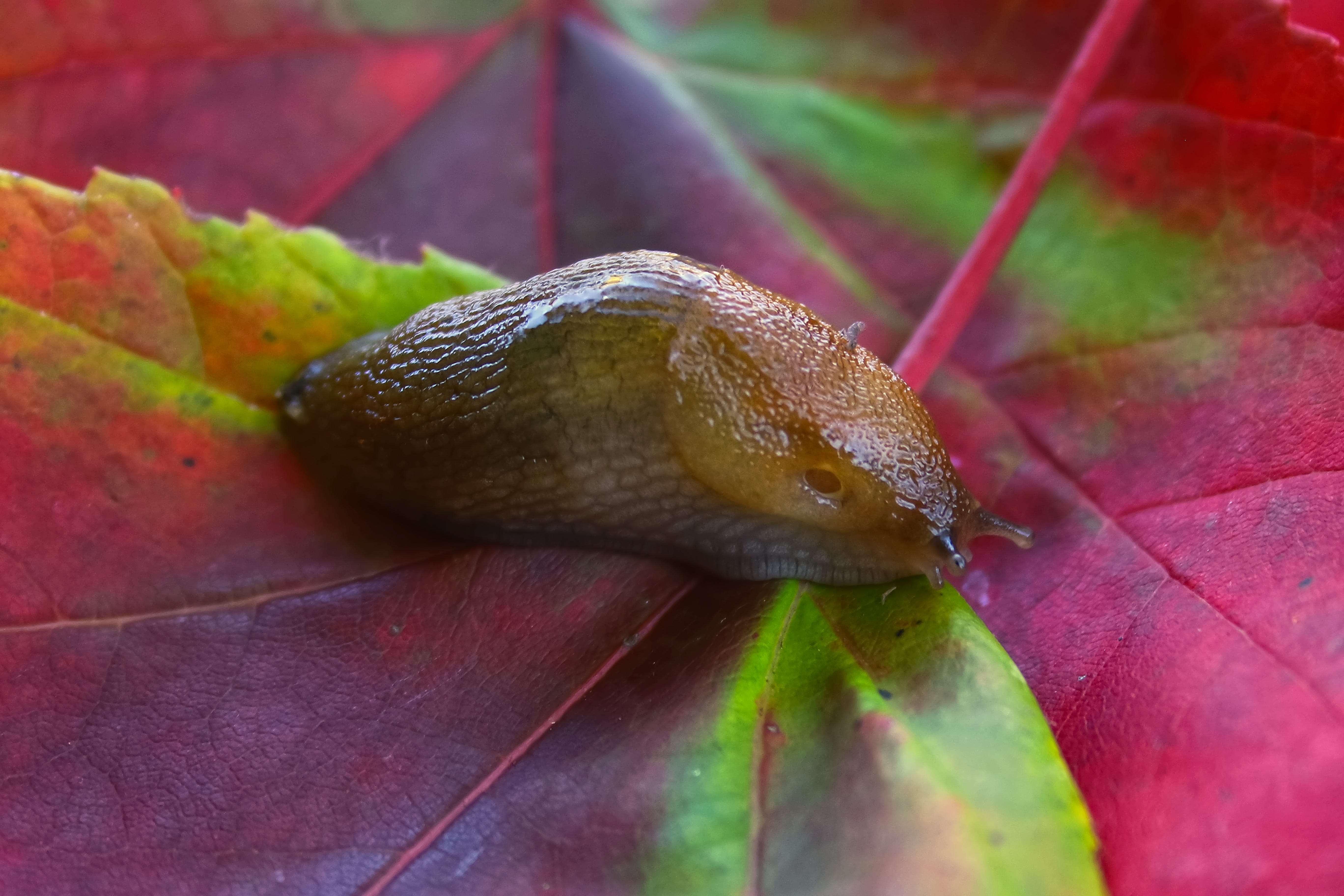
But why is all this important stuff around the mantle? You see, there was a time over the course of evolution when slugs were, well, snails. They had shells, which are ‘grown’ by secretions from the mantle. That means at one point all of those important orifices were protected by a hard shell exactly where the snails squishy naked saddle now exists. Some slugs even have a vestigial shell, a tiny remnant of the past, on the inside of the mantle, which still functions to store calcium salts.
Tail:
This one’s not too complicated: the rest of the slug’s body behind the mantle is called its tail. Easy.
Head:
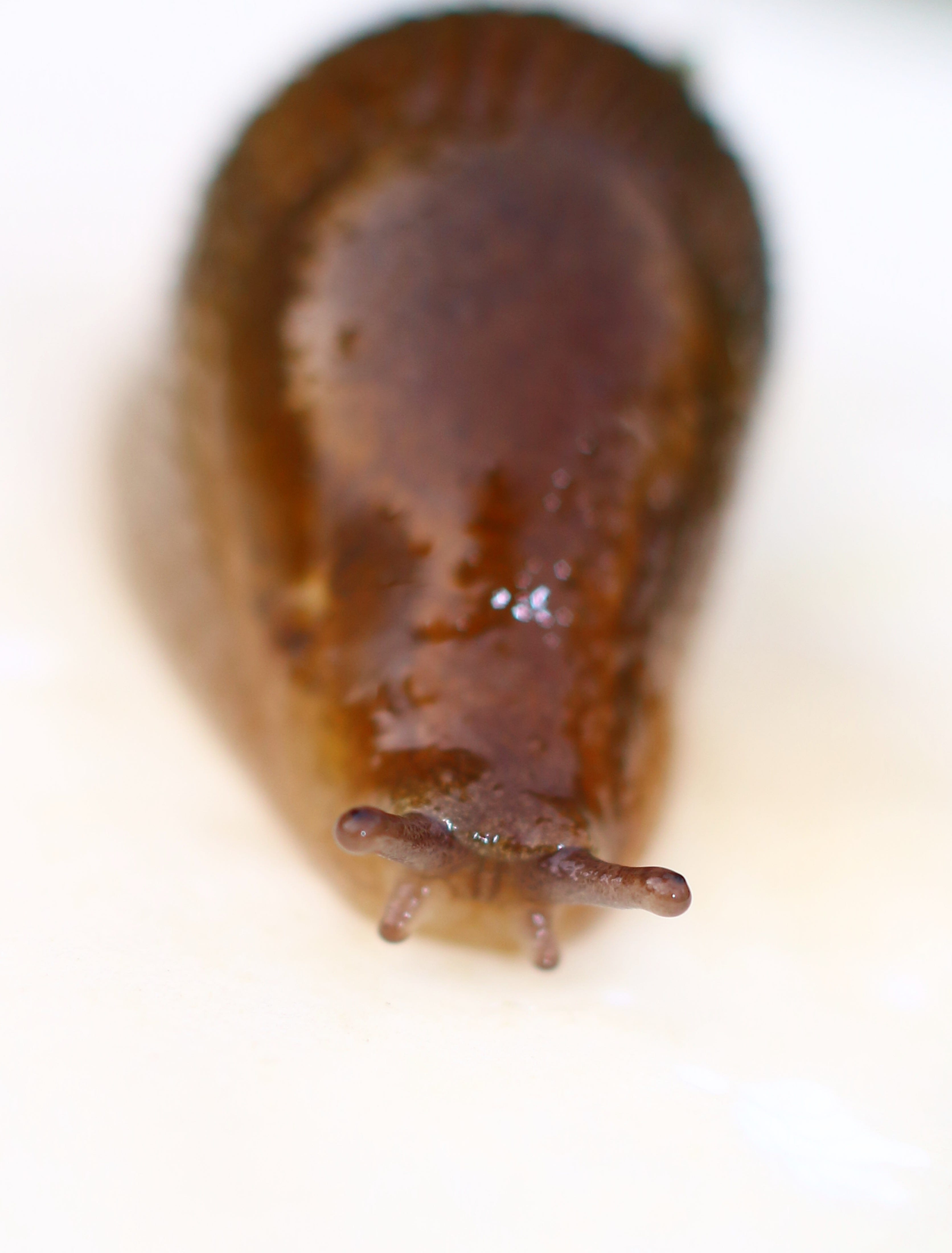
Sure, I didn’t ask you to imagine a head on your skirted foot, but slugs do indeed have a head. That head has two sets of tentacles, the top set for sensing light (those are their cute and creepy little retractable eyes) and the bottom set for smelling, which are also retractable. Then there’s the mouth, which is chock full of teeth (thousands of them!) called radula, that work like flexible rakes or graters to scrape (or rasp) food particles for easier eating.
Now, about that Slime of Slug called for by my great-great-great grandmother’s cookbook…
Remember how I said slugs are both sticky and slimy? I learned that this is because they make two types of mucus:
A thin, slippery slime is produced from the center of the foot out to the edges, aiding in locomotion. The mucus tracks produced by undulating slug feet act like a trail of gooey breadcrumbs helping slugs to find each other for mating (and for hunting each other in the case of some carnivorous slugs- yikers!), as well as guiding them back to their feeding spots and then back home (remember, those eye tentacles are just light sensors, they don’t form images).
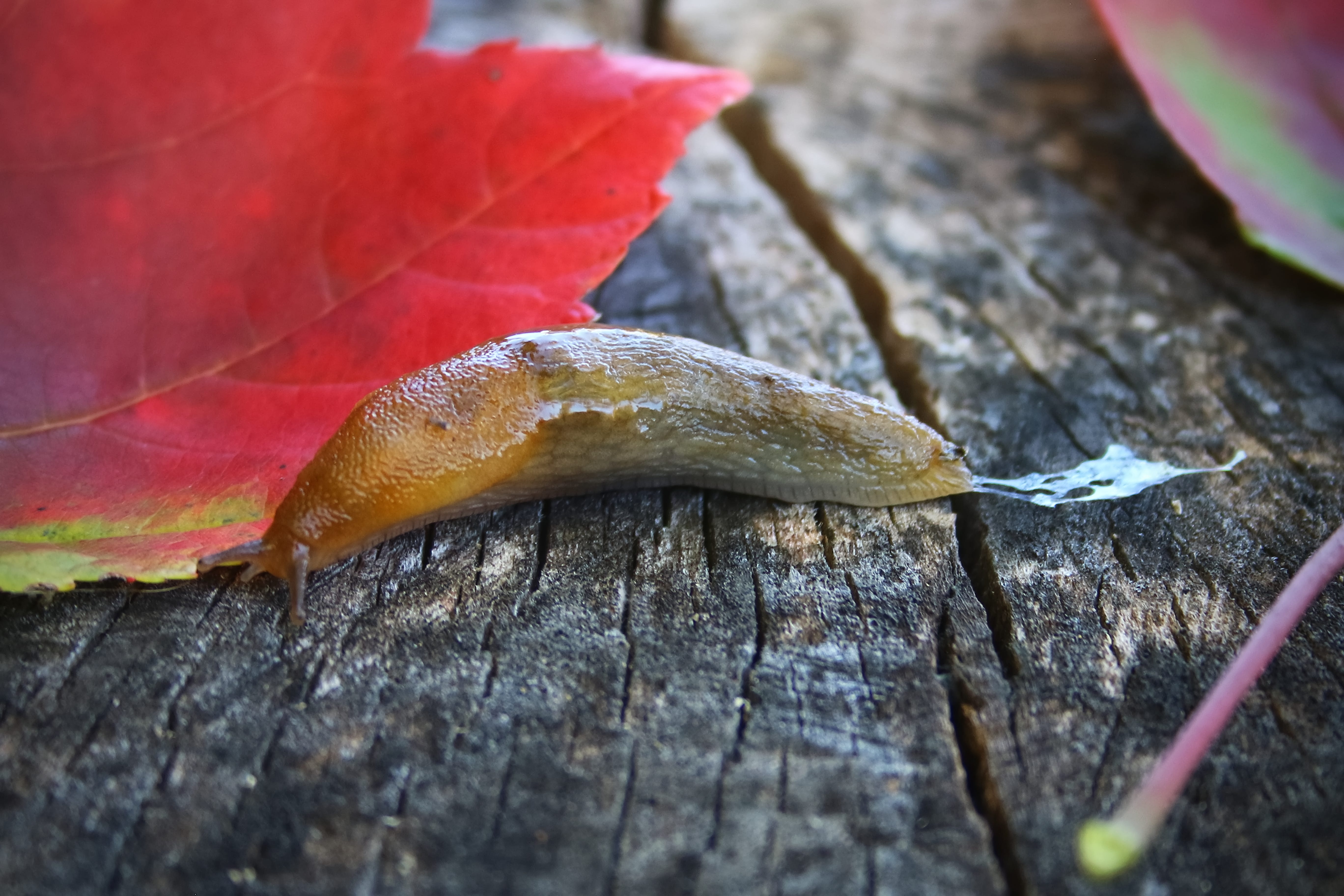
A thick, sticky mucus coats the slug’s body, not only to keep it moist and protect its skin, but also makes it harder for predators to snatch and eat them. It doesn’t taste too good either, so again Nana, what’s with those recipes? Oh, and there is a species of slug that creates slime cords from which they suspend themselves during copulation but I am NOT writing a second article in a row about kinky critter sex, so research that shit on your own!
Now that we’ve learned some of the basics of what makes a slug a slug, let’s talk about their value. First and foremost, they exist and they are alive. Ta-dah! That’s all the criteria I need personally, but it doesn’t hurt to outline some other nice things:
They’re not all garden-munching pests. Many species of slug prefer to eat decaying matter and contribute to the breakdown of organic material, enriching our soil with nutrients. As for the slugs that do fuck up your veggies? Remember, there are deterrents out there that don’t actually harm our little friends, who are just living their lives.
They’re food for other animals. Yep, it’s that damn Circle of Life again. Slugs are a nutritous food source for hedgehogs, birds, frogs and other animals.
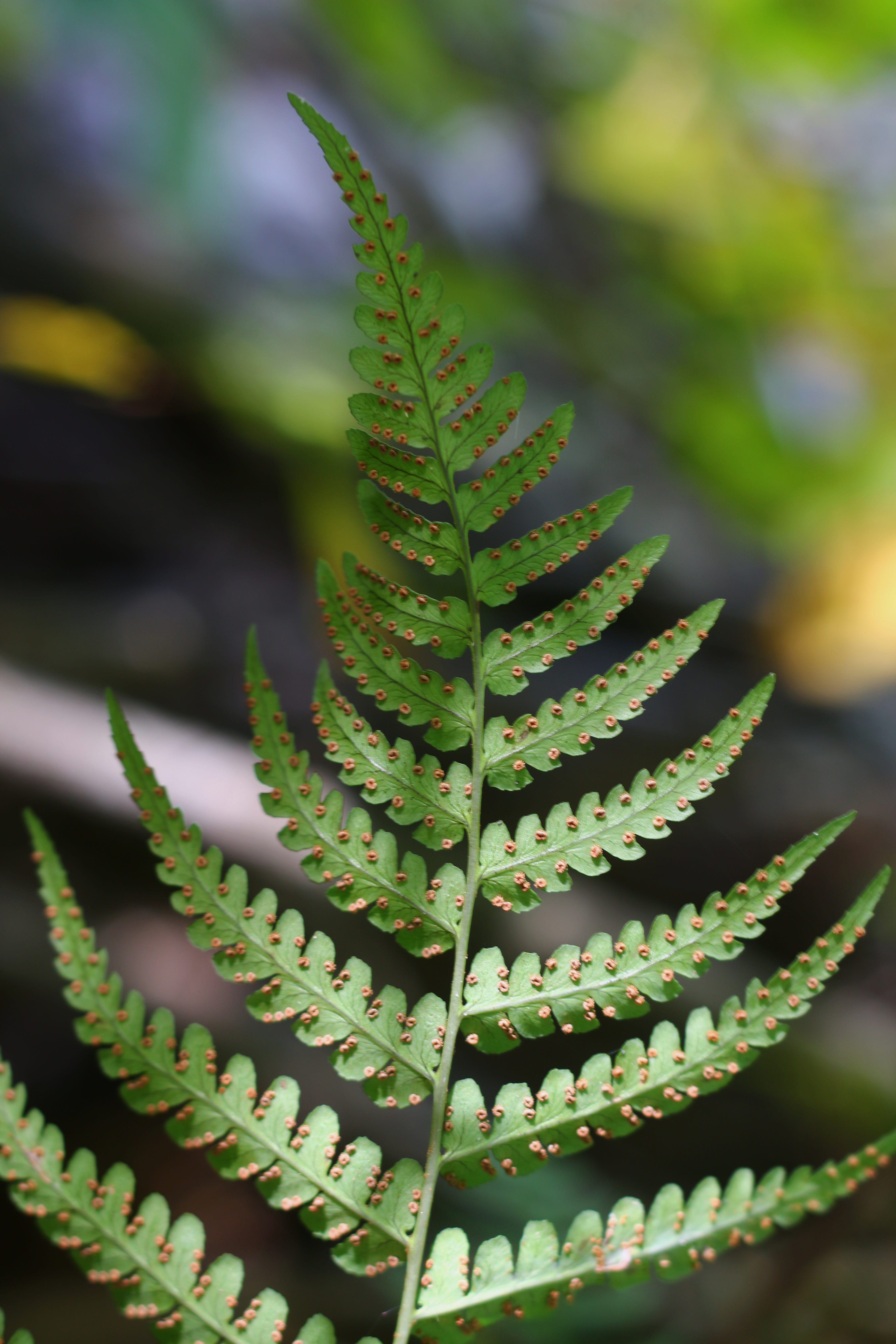
They help ferns to reproduce! If the spores of a fern are ingested by a slug, those spores are able to survive in the slug’s digestive system and are…ahem…deposited down the road where the spores can develop into a new fern.
They’re accidental pollinators, too. As a slug travels and rubs against flowers, the pollen can stick to the slug’s mucus coating, take a little ride, and drop off at the next flower. You can’t hate a pollinator, can ya?
Alright, my friends, that was the final creepy crawly article for this spooky month! I had a lot of fun and learned some cool facts, and I sincerely hope you did too. Thanks so much for reading, subscribing, commenting and sharing, every interaction makes my day.
By the way, did I mention that I hate the word mucus? I’m gonna need a vocabulary cleanse after this…
Nice article! Do you have any sources?