


They had their 15 minutes of fame at the peak of Minecraft’s popularity and maintain a cult following among aquatic animal enthusiasts and lovers of unusual creatures, but in my experience, most people don’t know much about these remarkable Mexican water puppies beyond their cute faces and fluffy gills. And there’s so much to know, which is why I’ve enthusiastically decided to write a series of articles about…
Drumroll…
The title definitely gave it away…Axolotls!
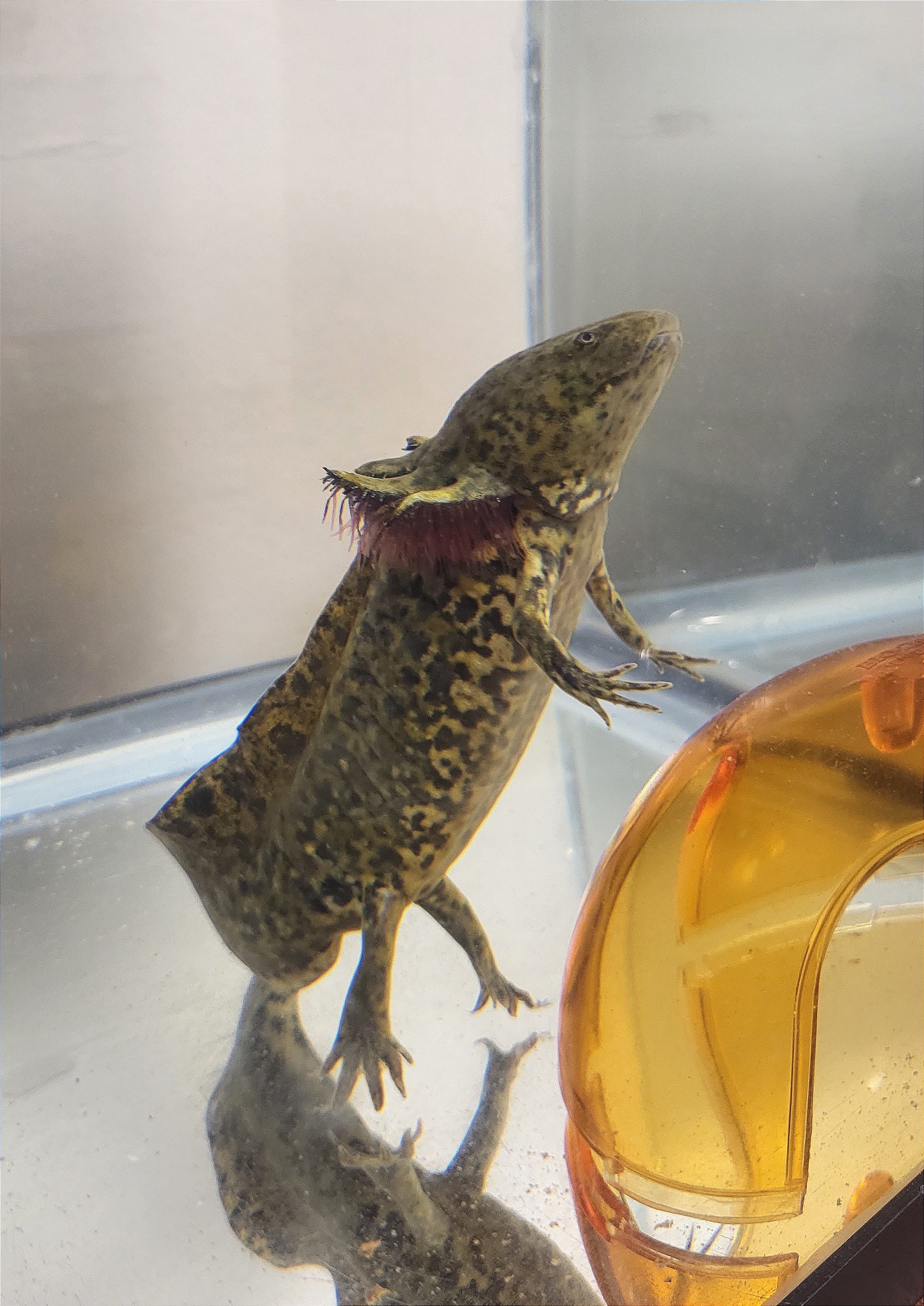
I want to introduce you to Fernie and Aro, my very own water children. These beautiful babies of mine (now about 4.5 years old) will be serving as the visual examples throughout this series:


In this article I will be focusing on the aforementioned gills since they’re definitely the most recognizable characteristic of the Axolotl, and a big part of what makes them special. Not because they have them, but because they keep them. Buckle up, I’m about to info dump on your asses. Axolotls are neotenic, meaning they retain their juvenile characteristics into adulthood. See, all salamanders that hatch and develop aquatically start out limbless with external gills and a flat, rudder-like tail fin, practically indistinguishable from larval Axolotls, but those gills shrink away as lungs develop, limbs grow and strengthen, the tail changes shape and the salamander leaves the water to live on land, or is at least capable of doing so. Axolotls and a few other species of salamander, however, evolved to remain fully aquatic and therefore retain the larval characteristics that allow for such an existence. The external gills stay, the limb development stops, and the fin-shape of the tail remains. Interestingly, Axolotls once did fully morph to a terrestrial adult form but the majority of Axies now lack high enough levels of the hormones needed to trigger and facilitate metamorphosis.


So, back to those iconic gills: If you’ve never been exposed to animals that breathe underwater, gills are for…well, breathing under water, or gas-exchange, if you want to be precise. That is, gills aren’t openings for inspiration and expiration like our mouths and nostrils, they actually perform the extraction of dissolved oxygen in the water and its delivery to the bloodstream and expel carbon dioxide, like lungs. Those fluffy filaments attached to the stalks (known as floofs amongst Axie lovers) are capillary-filled structures which provide more surface area for the gas-exchange process. They’re also packed with utter whimsey, but that seems to be a lucky side effect. The gill stalks (rami) do, one could say, act like our nostrils, because they ‘flick’ to move the oxygenated water for the filaments to access, kind of like inhaling. Axolotl gills also have structures called ‘gill rakers’ underneath which provide a filter of sorts for keeping food and other particulates from entering.
In conclusion, that’s how Axolotls breathe. The end.
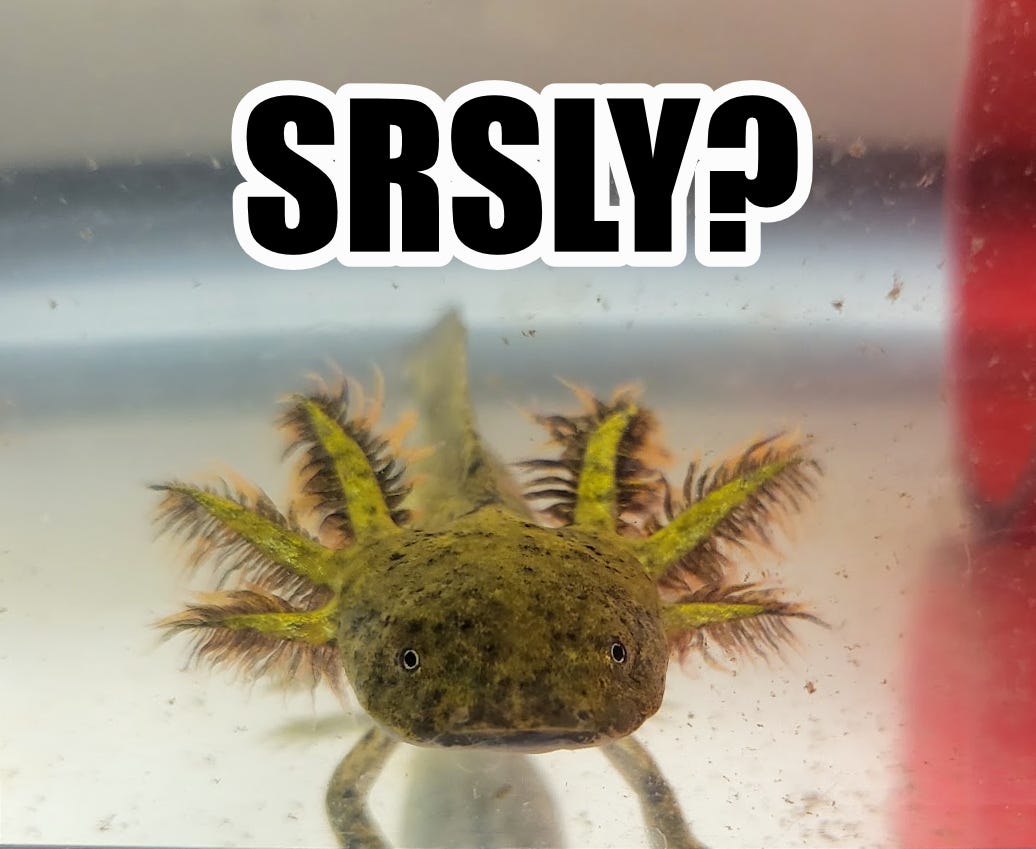
Okay, just kidding.
That’s just the main way that axolotls breathe. Like all amphibians, and therefore all salamanders, and therefore all Axolotls, they can absorb oxygen through their permeable skin with a process called cutaneous respiration. But wait, there’s more! In addition to their functioning gills, ‘Lotls also possess a set of primitive lungs that serve to help supplement the creature’s need for oxygen. So, if the water conditions are lacking in sufficient dissolved oxygen, the Axolotl can swim to the surface and take a gulp of air. In captive Axolotls, frequent visits to the surface for gulps is an indicator that your water parameters may need adjusting…which leads us to another important aspect of the gills: health awareness.
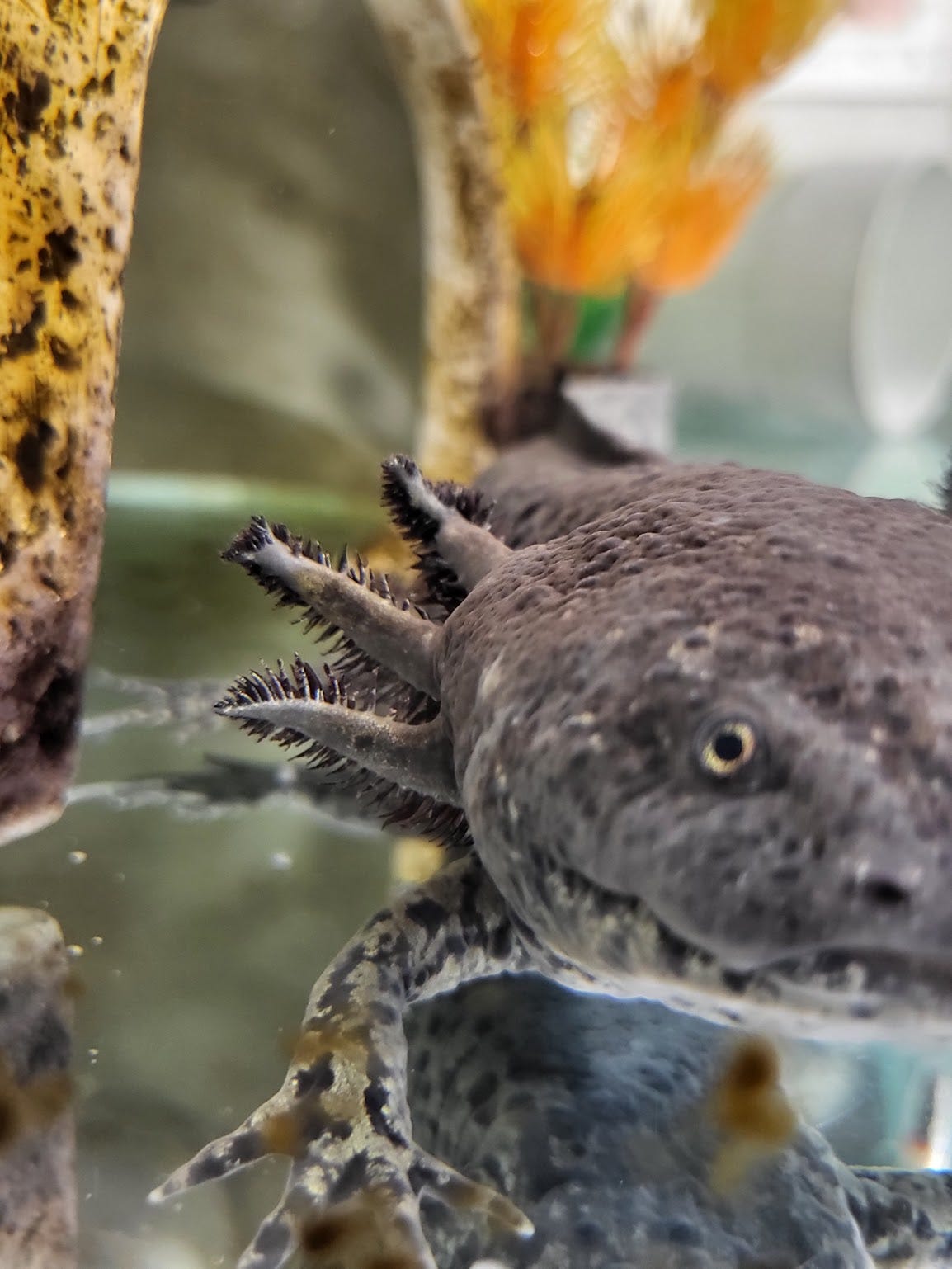
The floof-factor, length, color, and positioning of an Axolotl’s external gills are strong indicators for the health and comfort of the animal. If filaments are sparse, pale and short and the stalks are looking stubby, it’s likely the Axolotl has been living in inadequate conditions for an extended period. This can mean Ammonia, Nitrite, and/or Nitrate levels in the water are too high, the water is too warm, and/or there is not enough dissolved oxygen, and that the issue has likely been going on for a bit. Don’t worry, I’ll dive more into the topic of proper Axolotl keeping and parameter specifics in a separate article. Another indicator of stress or discomfort would be those gill stalks curling forward, shaped like a mane of candy canes around the head. This is a telling sign of perhaps more acute and/or severe stress or discomfort. You’ll see in the photo below that during a time when I was having great difficulty achieving and maintaining good water conditions despite every effort (turns out my city’s water just sucks), my buddy Fern’s gills were noticeably lacking in floofs.
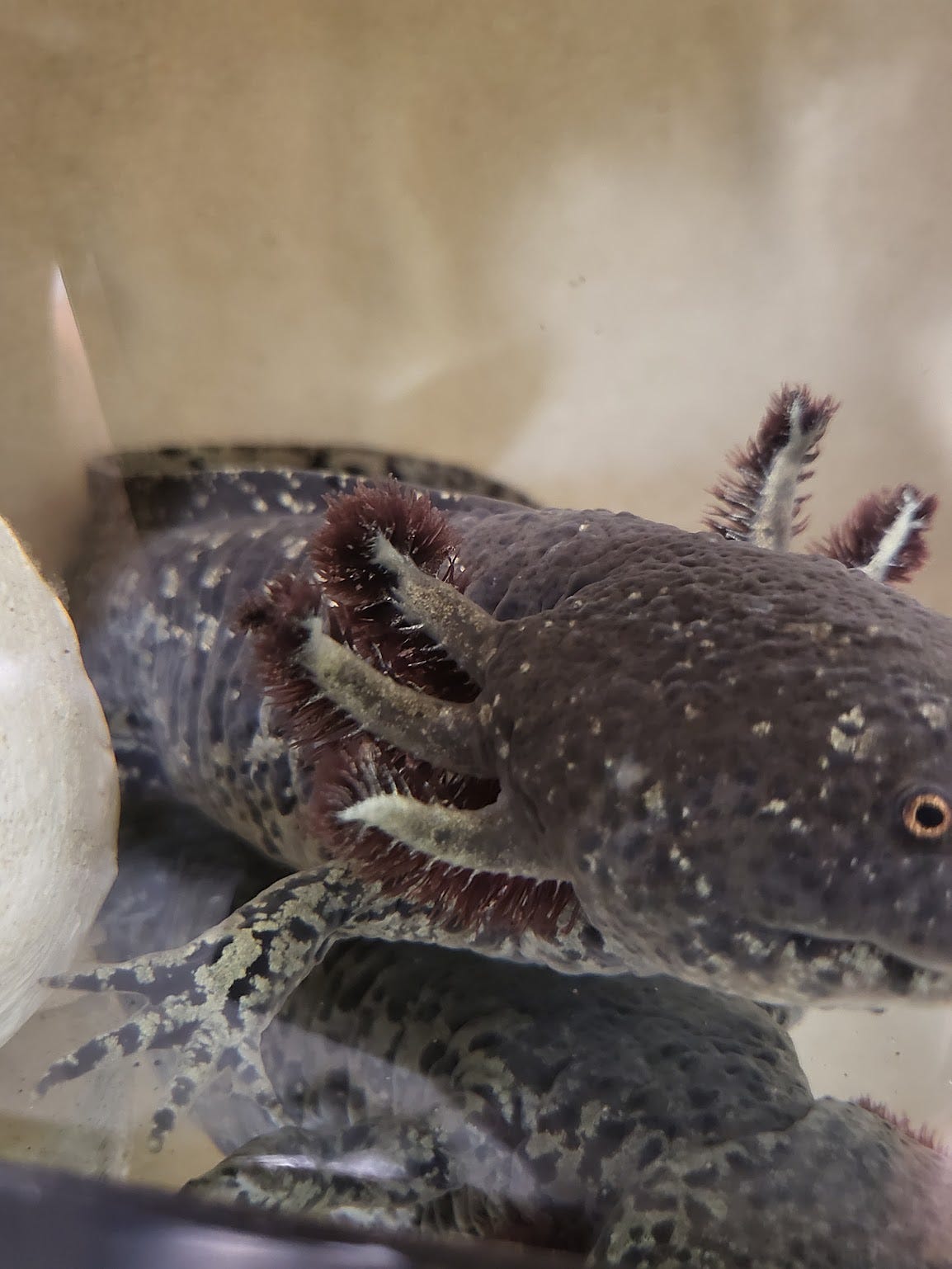
Conversely, abundant, longer filaments flush with color (or depth of pigment) on long, splayed stalks indicate good oxygenation, comfort, and health. Keep in mind also that genetics can play a role in just how long and fluffy those gills can be, so a healthy Axie with long stalks and shorter, but densely packed filaments may be just as healthy as one with slightly stubbier stalks and gloriously long filaments, waving in the water flow like the hair of a mermaid.
Finally, I want to make a point of addressing myths and misinformation about Axolotls in this series, so here’s a couple about gills:
One misunderstanding is that extra-long gill filaments actually indicate low oxygen levels in the water. The logic is that the floofs are growing longer to create more surface area as a response to, and attempt at compensating for a lack of oxygenation. But, this study shows that Axolotls are oxygen conformers, meaning they adjust their oxygen consumption to better match the levels available to them. So, it would make more sense that the filaments, in fact, may grow in response to higher oxygenation in order to suck up all that oxygen-y goodness, and shrink in response to lower levels because they aren’t as useful.
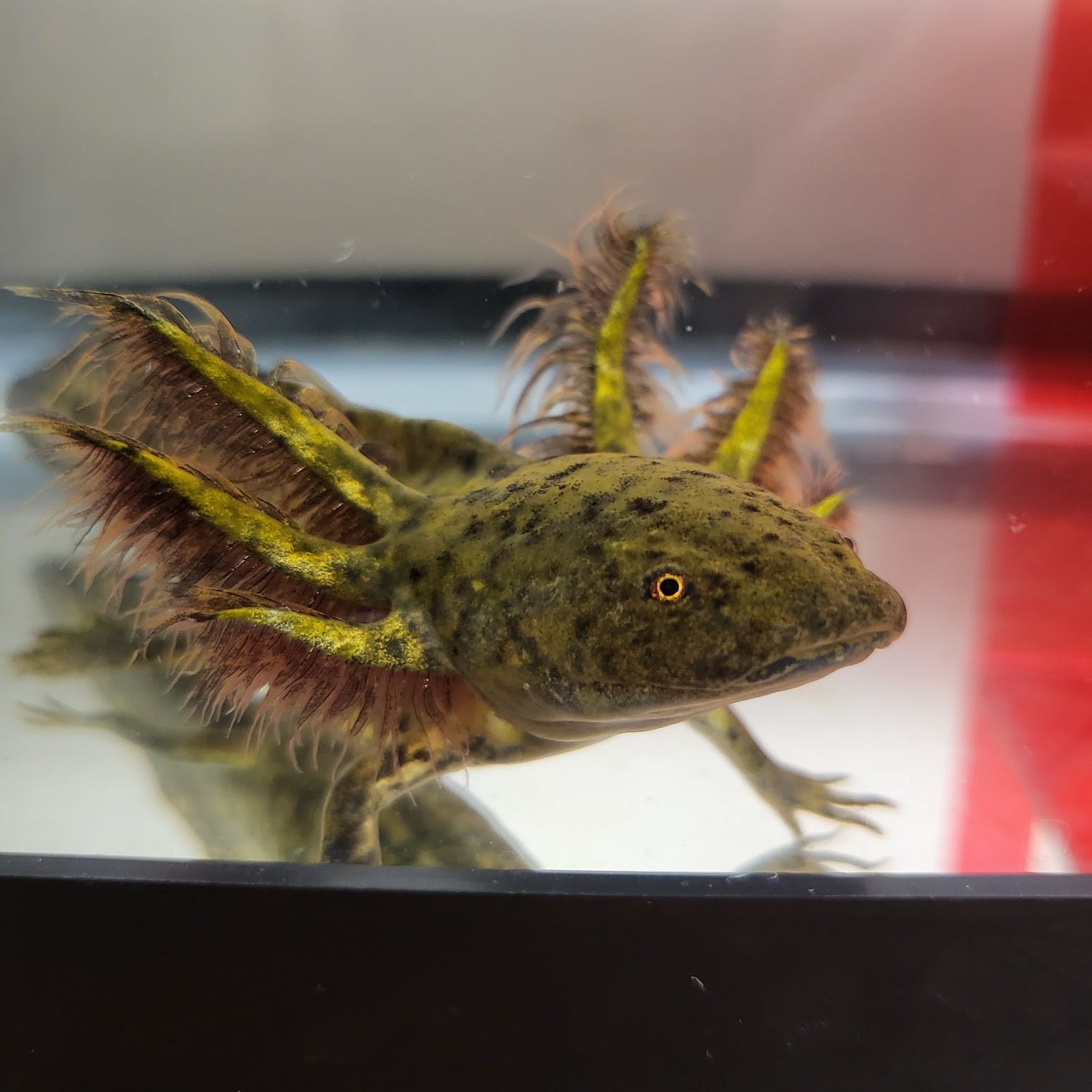
Another gill-related myth is that the shrinking-back of these vital organs means the Axolotl is morphing into a land-dweller. The fact is that while a very small percentage of Axies do end up undergoing metamorphosis naturally and can be triggered to do so in a laboratory setting, the hormones required to trigger this change are by and large too low to set-off the process. Remember, Axolotls did indeed metamorphosize at some point in their evolutionary history, but the conclusion is that because their native larval environment was equally adequate or more beneficial to their wellbeing into maturity, the need to morph was of no advantage and therefore became recessive overall. That’s a lot of words to tell you that if an Axie’s gills are shrinking back, it’s more likely that they are experiencing less than ideal environmental conditions which need to be addressed.
Alright, dear readers, that was just one part of an Axolotl! I have no idea at this point how many articles will end up in this series and I’m not decided the exact intervals I’ll release them, but I guarantee that everything else I cover will be just as cool and informative (I think so, anyway), so if you aren’t already, I humbly invite you to subscribe so you don’t miss anything.
As always, thanks for reading!
Axolotls are so cool! Primitive lungs? that too aquatic! And neoteny is trippy too... Need to know more about. Thanks..loved it.
I enjoy your writing style Meadow. That article was both informative and easy to read.
... and of course now I want to find out more about maybe getting an Axie myself.